Reverse logistics and returns management
Bring returns into the same workflow as your outbound freight. Agistix automates label generation and tracking from customer RMAs to employee equipment retrieval, all in one platform.
From RMA to employee equipment, every return managed
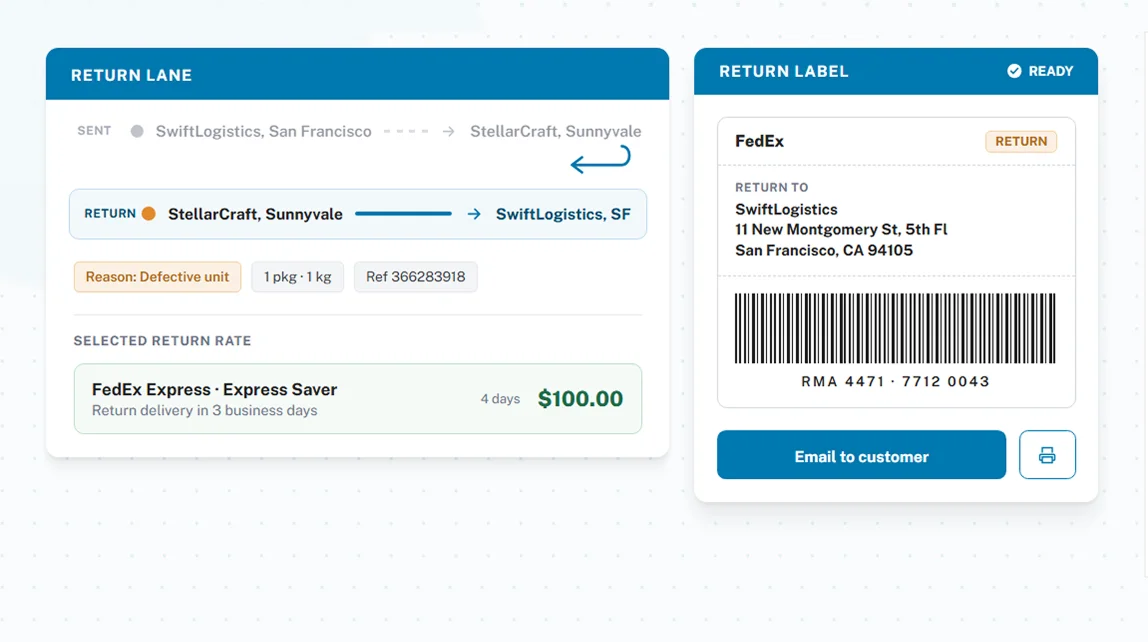
Return on booking
Return label generated and linked to the outbound shipment at the time of booking.
- A return shipment can be created as part of the outbound booking workflow
- Carrier and service selected, booked, and linked to the original shipment automatically
- Label generated and ready to include in the outbound package
Self-service return initiation
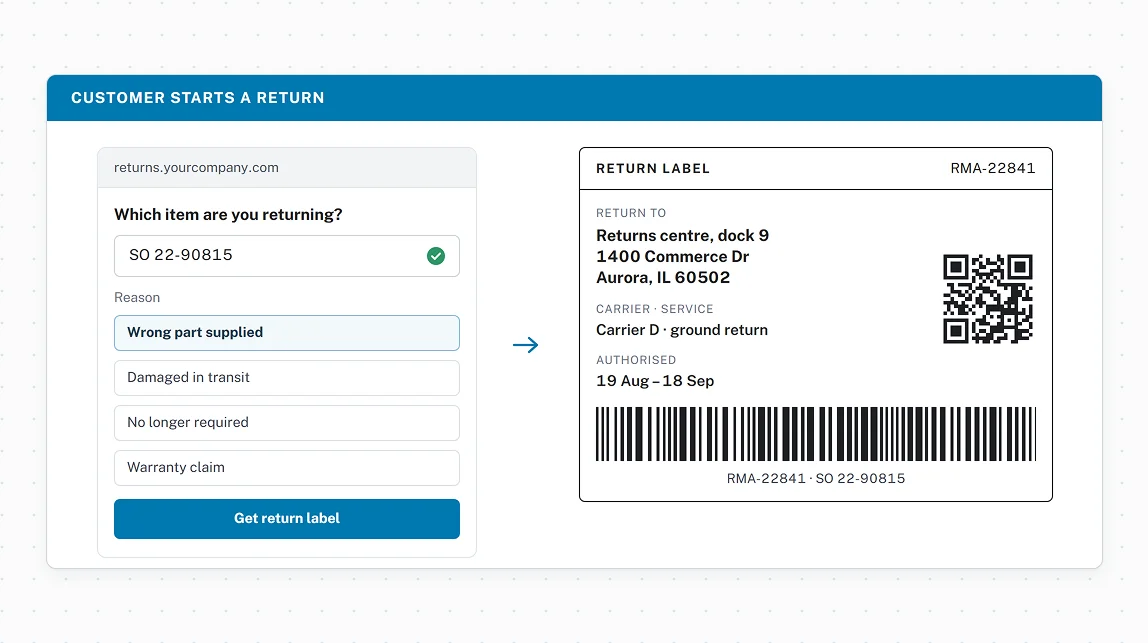
Scan a QR code or access a branded portal – no TMS login, no manual coordination.
- QR code generated alongside every outbound shipment gives customers and end users a direct path to initiate a return
- Scanning opens a branded Microsite with the return form pre-populated from the original shipment
- Standalone branded Microsite available for recurring scenarios like employee equipment retrieval and RMA programs
Configurable approval workflow
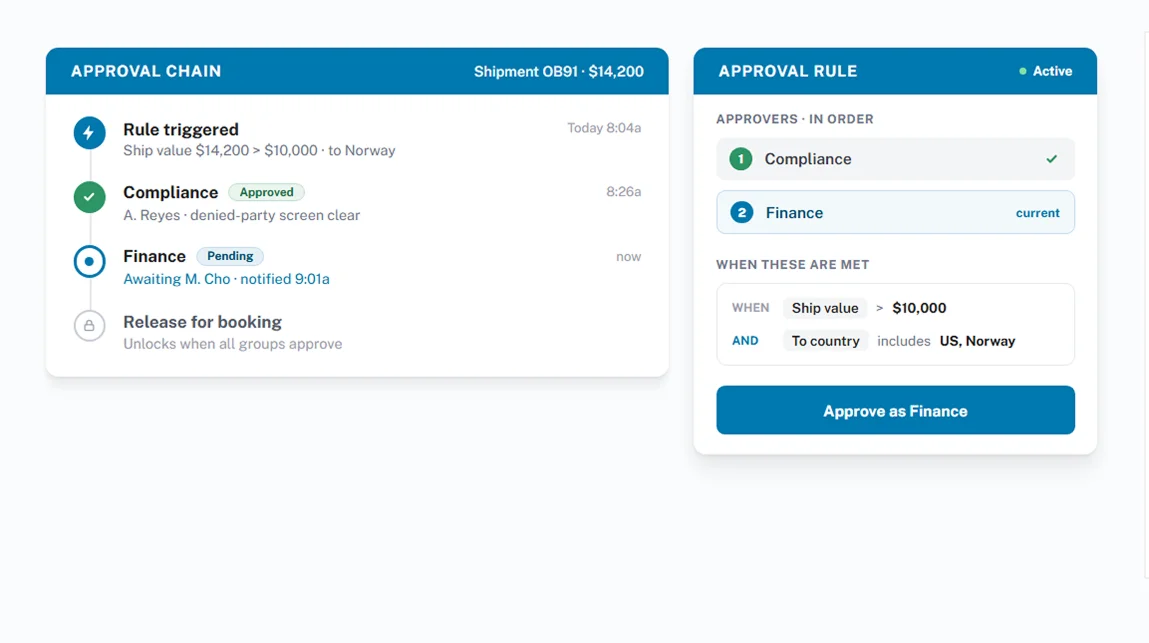
Return requests routed for approval before a label is issued.
- Return label requests gated behind a configurable approval workflow regardless of initiation method
- Approvers review and approve or decline before the label is issued
- Reason codes and notes visible to the approver for context without back-and-forth
International returns
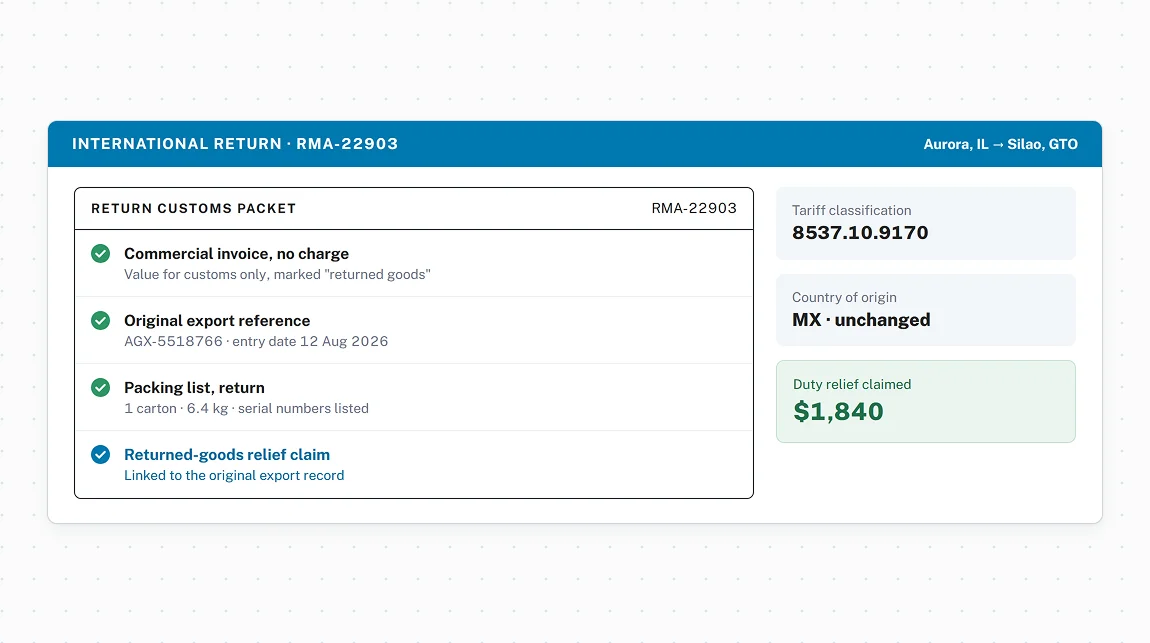
Cross-border returns processed with correct duty treatment and customs documentation.
- International return shipments classified with carriers as returns for correct tariff treatment
- Reduced or zero duty applies in many cases
- Required customs documentation including commercial invoices and CN22/CN23 declarations generated automatically
Visibility and reporting
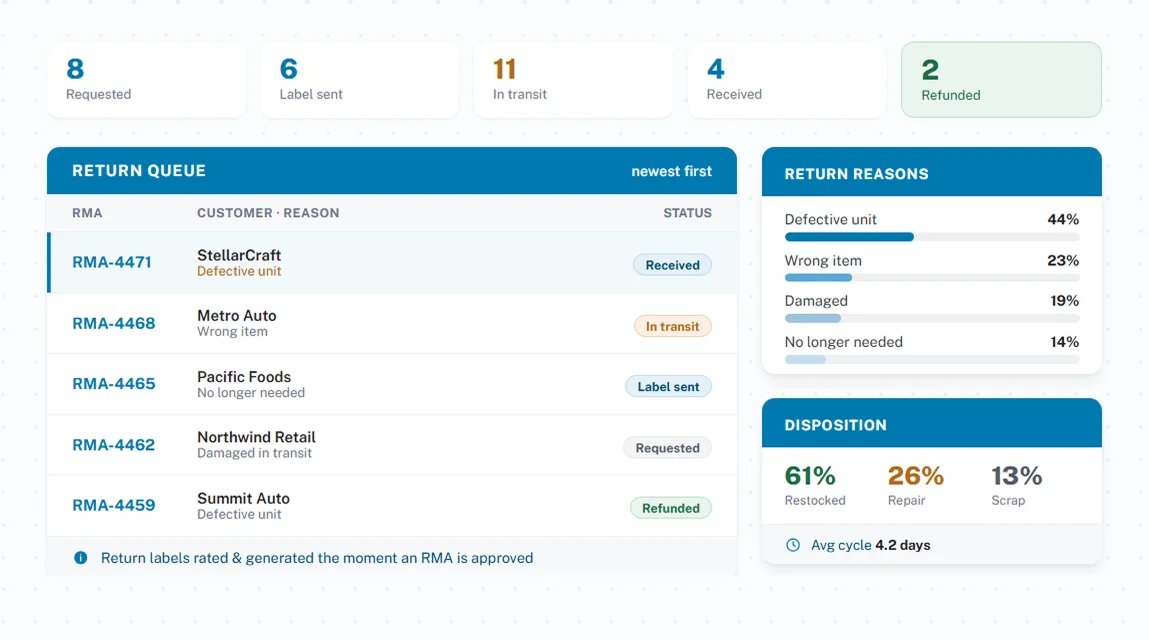
Every return shipment tracked and reported alongside outbound freight in one platform.
- Every return visible in the platform alongside outbound freight
- Teams filter by return type, carrier, department, reason code, or return origin
- Finance gets spend visibility; operations gets status data without a separate system
What our customers are saying

Bringing Agistix on board has been a transformative step for our organization. By implementing the platform, we were able to bring our non-production shipping activities under control.
More to explore across the platform
The world is taking notice



See Agistix in action
See how Agistix takes the manual work out of reverse logistics.
FAQs
Can a return label be generated as part of the outbound booking workflow?
Yes. When creating an outbound shipment in Agistix, users can request a return in the same workflow. Agistix books the return with the selected carrier and service, links it to the outbound, and generates a return label ready to include in the package.
How does Agistix ensure the right carrier and service level are selected for a return shipment?
Agistix applies the same carrier selection and routing logic to return shipments as outbound freight. Routing rules, contracted rates, and service level requirements govern carrier selection automatically based on return type, origin, destination, and any configurable constraints set by the logistics team.
How does Agistix handle international return shipments?
International returns are classified with carriers as return shipments, ensuring correct tariff treatment including reduced or zero duty in many cases. Agistix generates required customs documentation including commercial invoices and CN22/CN23 declarations automatically.
Can return locations be configured based on commodity or origin?
Yes. Return destinations can be configured by commodity type or shipment origin through Agistix Microsites, ensuring returns route to the correct facility, whether that's a reprocessing center for specific materials or a regional return hub based on where the original shipment originated.
Can return shipment costs be allocated back to a department, cost center, or business unit?
Yes. Return shipments in Agistix carry the same GL classification, cost center, and business unit allocation as outbound freight. Finance teams can filter return spend by department, reason code, or return origin alongside outbound cost data in standard platform reports.