Execute multimodal freight from a single platform
Stop juggling separate systems for every mode. Agistix centralizes rating, booking, tracking, and documentation across air, ocean, rail, and road.
Freight execution across every mode and carrier
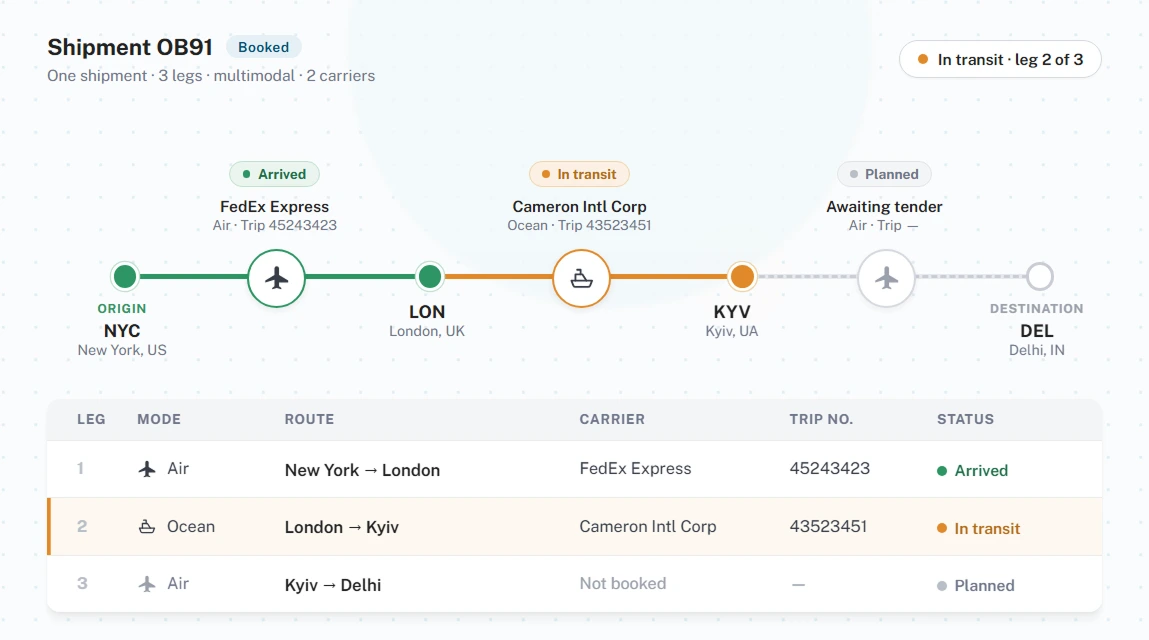
Multi-leg and multimodal shipment execution
Rate, bid, book, and track shipments across every mode from a single platform.
- Freight execution across parcel, LTL, truckload, air, ocean, and rail with rate, transit time, and service level comparison before booking
- For multimodal shipments, every leg is booked, documented, and tracked under a single shipment record
Multi-stop and milk-run management
Stop-level tracking and documentation across every pickup and delivery.
- Multi-stop routes run as standard shipment executions on a single shipment record
- Recurring supplier milk-runs and hub-and-spoke distribution routes handled without workarounds
- Stop-level attributes, tracking, and documentation maintained throughout
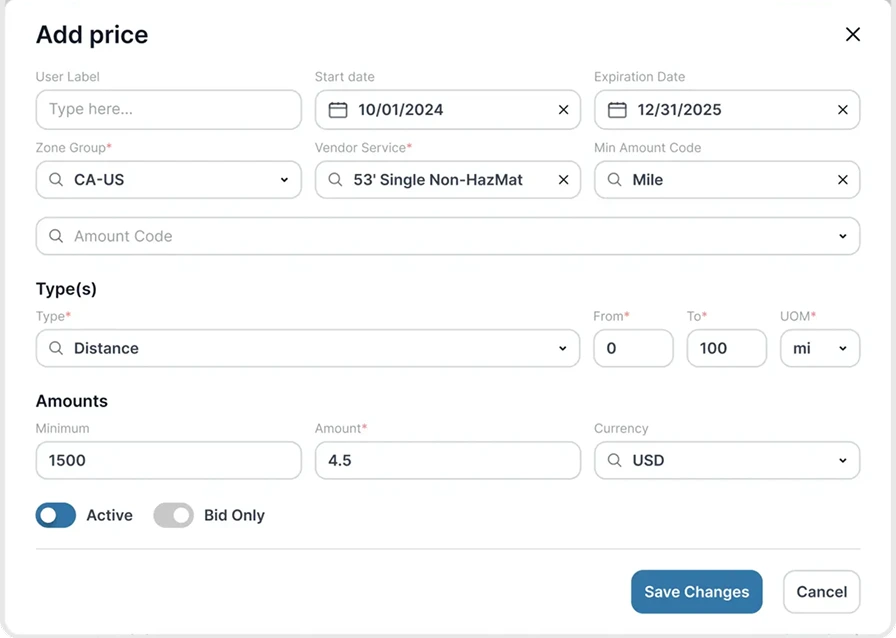
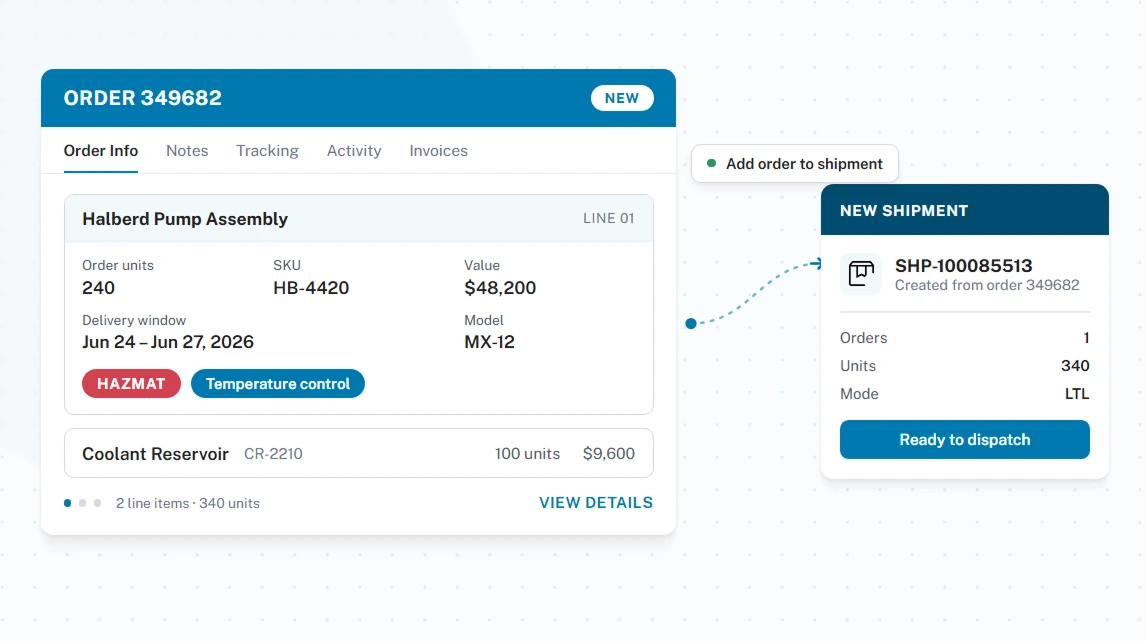
Container, package, and content hierarchy
Line-item attributes carried through at every level of the shipment.
- Multiple containers per shipment and multiple packages per container are fully supported
- Line-item attributes carried through to the correct level of the hierarchy
- Commodity classifications, hazmat designations, and temperature thresholds follow the shipment structure automatically
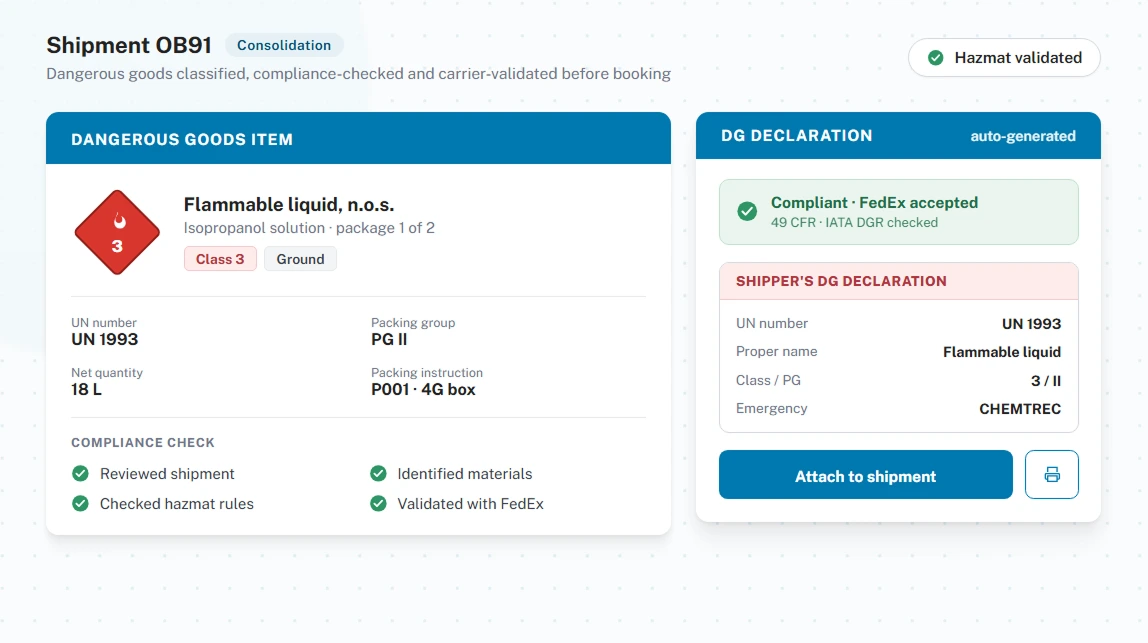
Hazmat and dangerous goods
Complex freight executed correctly across every mode, from carrier acceptance through delivery.
- Correct carrier acceptance rules, packaging requirements, and quantity limits applied for the mode and commodity
- Compliance documentation generates automatically from commodity attributes in the shipment record
- Facilitates compliance with 49 CFR for ground, IATA DGR for air, and IMDG for ocean
Mode-specific attributes and compliance
The right data fields and compliance requirements applied automatically based on mode.
- Ocean shipments capture ISF filing requirements and container type; air shipments include known-shipper status
- Each mode surfaces its required data fields and compliance requirements without manual configuration
Enterprise system integrations
Data connected across your existing TMS, ERP, WMS, and carrier networks.
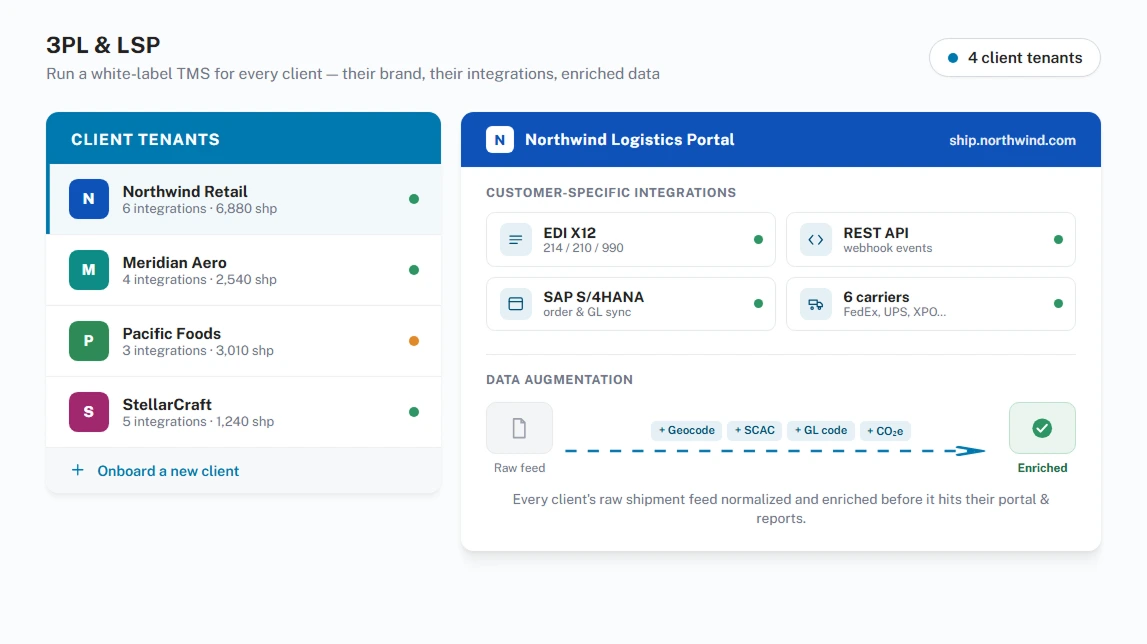
- Native connections to SAP, Oracle, NetSuite, and Microsoft Dynamics as well as warehouse management systems and carrier networks
- Bi-directional data exchange ensures shipment data flows consistently across business units and external partners
What our customers are saying

Agistix has been instrumental in streamlining our shipping processes and improving visibility across our supply chain. Their tailored software platform was customized to meet our unique operational needs, enabling more efficient workflows and greater transparency.
More to explore across the platform
The world is taking notice



See Agistix in action
Get a closer look at how Agistix manages freight execution across every mode, carrier, and leg of the journey.
FAQs
Does Agistix support shipments that span multiple modes and carriers?
Yes. Agistix supports multi-leg shipments across any combination of modes including parcel, LTL, truckload, air, ocean, and rail. Every leg is booked, documented, and tracked under a single shipment record regardless of how many carriers or modes are involved.
Can Agistix compare rates across modes before booking?
Yes. Agistix surfaces rate, transit time, and service level options across modes and carriers before a booking is committed. Logistics teams can evaluate cost and service tradeoffs across options and select the best fit for each shipment without leaving the platform.
Can different business units manage their own freight within the same platform?
Yes. Agistix supports multi-business-unit configurations, allowing different teams, divisions, or product lines to manage their own freight operations within a shared platform while maintaining centralized visibility and reporting across the organization.
Can Agistix manage both inbound and outbound multimodal freight?
Yes. Agistix manages freight execution across both inbound and outbound flows, including supplier-booked and third-party freight on the inbound side. All shipments, regardless of direction or booking origin, are visible in a single platform.