Automated document generation for every shipment
Take the manual work out of shipping documentation. Agistix generates BOLs, commercial invoices, packing lists, and customs paperwork directly from the shipment record.
From shipment record to compliant documentation
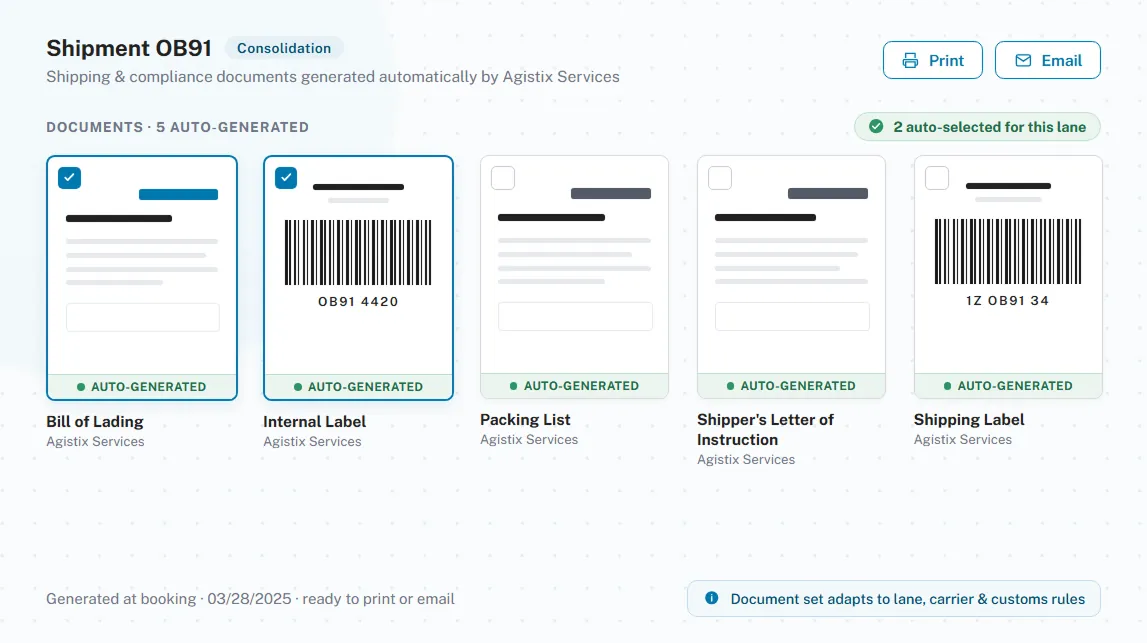
Document templates and rules engine
Custom templates generated automatically based on unique shipment attributes.
- Any number of custom document templates driven by a rules engine based on mode, destination, commodity, carrier, or customer
- When a booking is confirmed, the correct documents generate automatically without manual selection or data re-entry
- Custom document formats adapt automatically to any combination of origin, destination, customer, supplier, or commodity
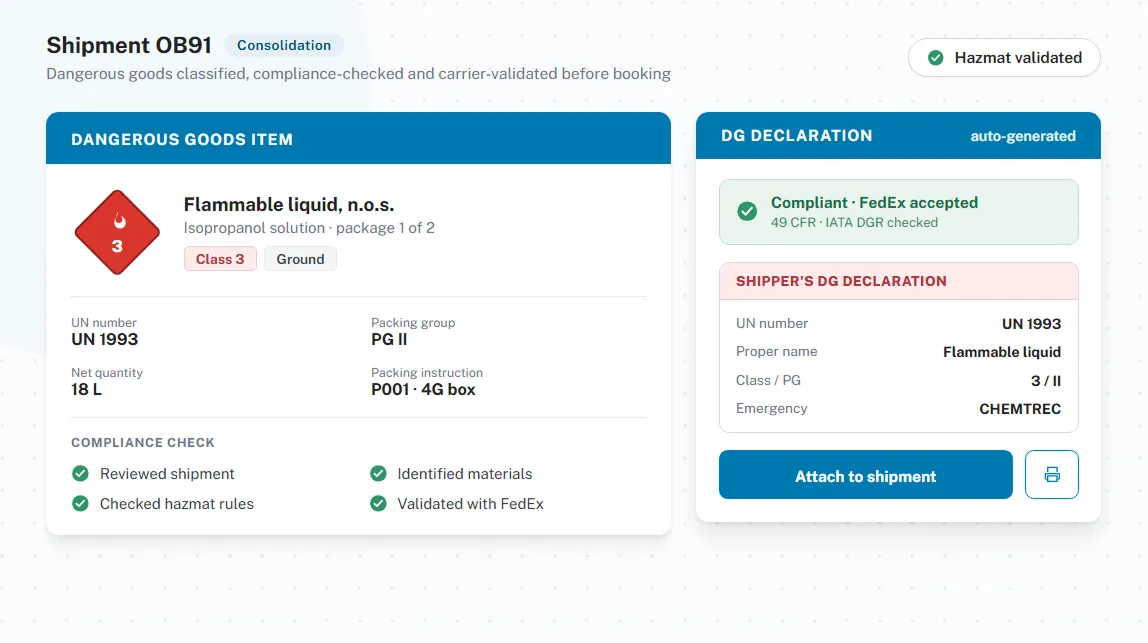
Hazmat and dangerous goods documentation
49 CFR, IATA DGR, and IMDG compliant documents, built from commodity data.
- Hazmat documentation generated automatically based on commodity attributes already in the shipment record
- Facilitates compliance with 49 CFR for ground, IATA DGR for air, and IMDG for ocean
- Every required compliance document is ready at booking confirmation
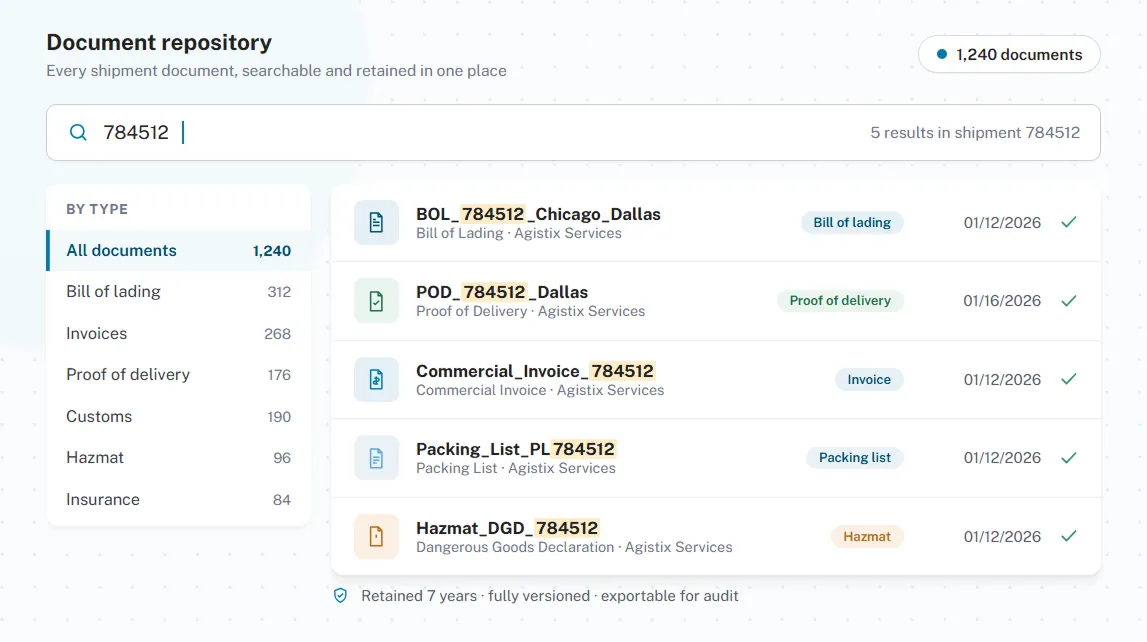
Customs and export documentation
Commercial invoices, packing lists, and certificates of origin pulled from line-item data.
- Customs paperwork generated directly from shipment and commodity data already in the record
- ECCN codes, HTS classifications, country of origin, and line-item details flow into every customs document automatically
- Keeps paperwork consistent with what was actually shipped, reducing the risk of customs delays or rejected entries
Dynamic QR and 2D barcodes
Every label and document linked directly to a live digital workflow.
- Dynamic QR and 2D barcodes embedded into any label or document, linking directly to a Microsite workflow
- Scanning a code on the physical shipment gives instant access to real-time tracking, POD capture, exception reporting, or document retrieval
- Every label and document becomes a live portal into the shipment's digital record
Real customers, real results

A global pharmaceutical leader automated FDA use letter generation with Agistix, saving over 40 hours a month previously spent on manual document preparation.
Read the case study →More to explore across the platform
The world is taking notice



See Agistix in action
Get a closer look at how Agistix automates document generation across every shipment, mode, and destination.
FAQs
Does Agistix generate hazmat and dangerous goods documentation?
Yes. Agistix generates hazmat documentation compliant with 49 CFR for ground shipments, IATA DGR for air, and IMDG for ocean, based on commodity attributes already captured in the shipment record. The correct documents for the mode and commodity generate automatically at booking confirmation, including lithium battery shipping documentation.
How does the document rules engine work?
Document templates in Agistix are triggered automatically based on shipment attributes and conditions including mode, destination, commodity, carrier, and customer. When a booking is confirmed, the rules engine determines which documents are required and generates them without manual selection or data re-entry.
Can recurring documents be stored and attached automatically?
Yes. The Agistix document library stores recurring documents including material safety data sheets, certificates of origin, and other compliance documents for automatic attachment to the relevant shipments.
Do customs documents pull from commodity classification data?
Yes. Agistix populates customs paperwork directly from the commodity library, pulling ECCN codes, HTS classifications, Schedule B codes, and country of origin automatically. This keeps customs documents consistent with what was actually shipped and reduces the risk of rejected entries or customs delays.
Can documents and labels connect directly back to Agistix Microsites?
Yes. QR codes embedded on labels and documents link directly to Agistix Microsites, giving carriers, recipients, and other stakeholders a way to access tracking, capture proof of delivery, or retrieve documents by scanning the physical shipment.