Close the gap between forecast and invoice
Agistix builds freight spend forecasts from live shipment data, then checks them against actual carrier charges every month, so variances surface before it hits the budget.
Spend intelligence designed for logistics
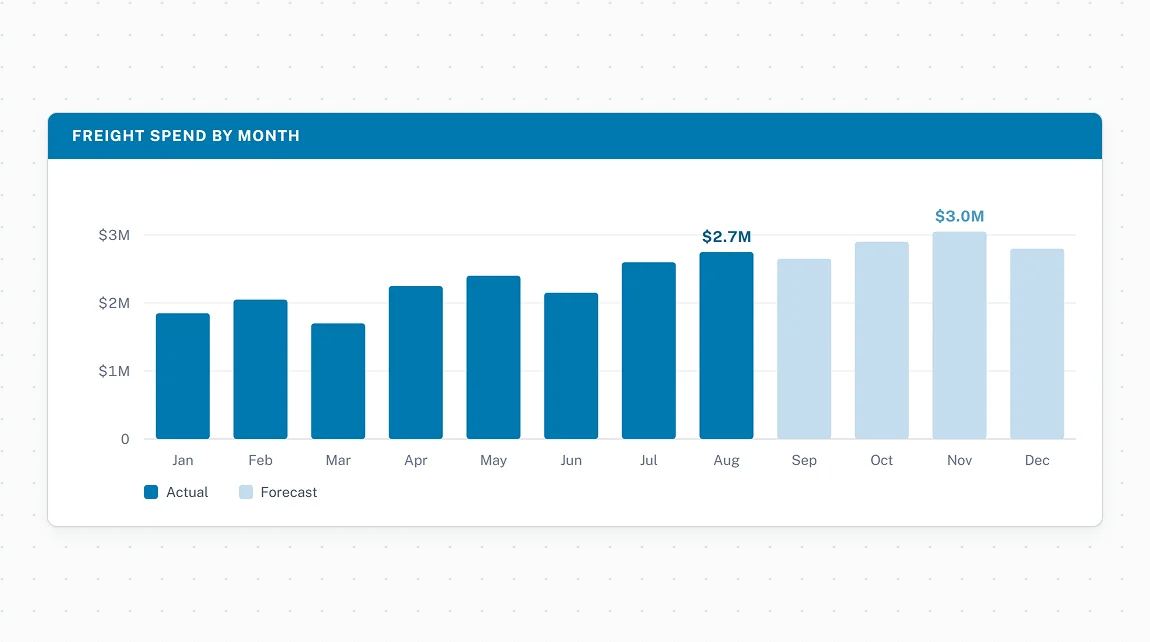
Forecasts built from live shipment data
Spend rolls up from the same shipment records your operations team is already using.
- Forecast data is queryable by mode, lane, carrier, business unit, cost center, or accessorial type
- Drills from a single forecast line down to the underlying shipments driving it
- Updates continuously as new shipments move, not on a reporting cycle
Advanced scenario modeling
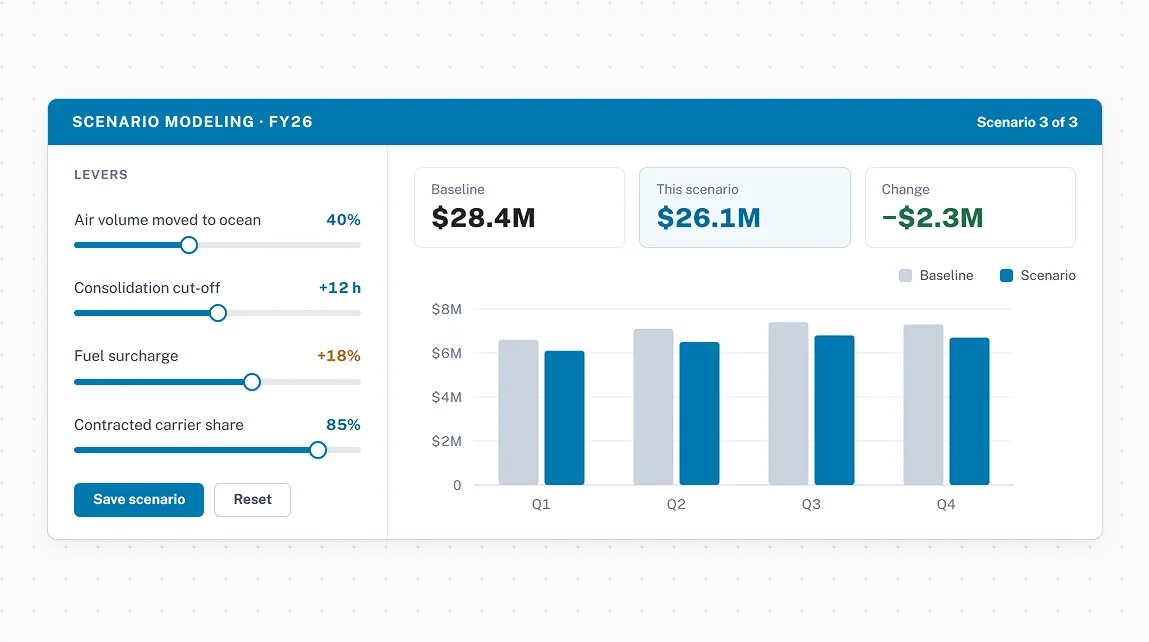
Model shifts in carrier mix, consolidation, and fuel cost before they hit actual spend.
- Projects the cost impact of shifting volume to a new carrier or lane
- Quantifies the spend reduction from consolidating parcel, LTL, or truckload shipments
- Runs fuel and rate-change scenarios against your actual shipment base
Automated invoice reconciliation
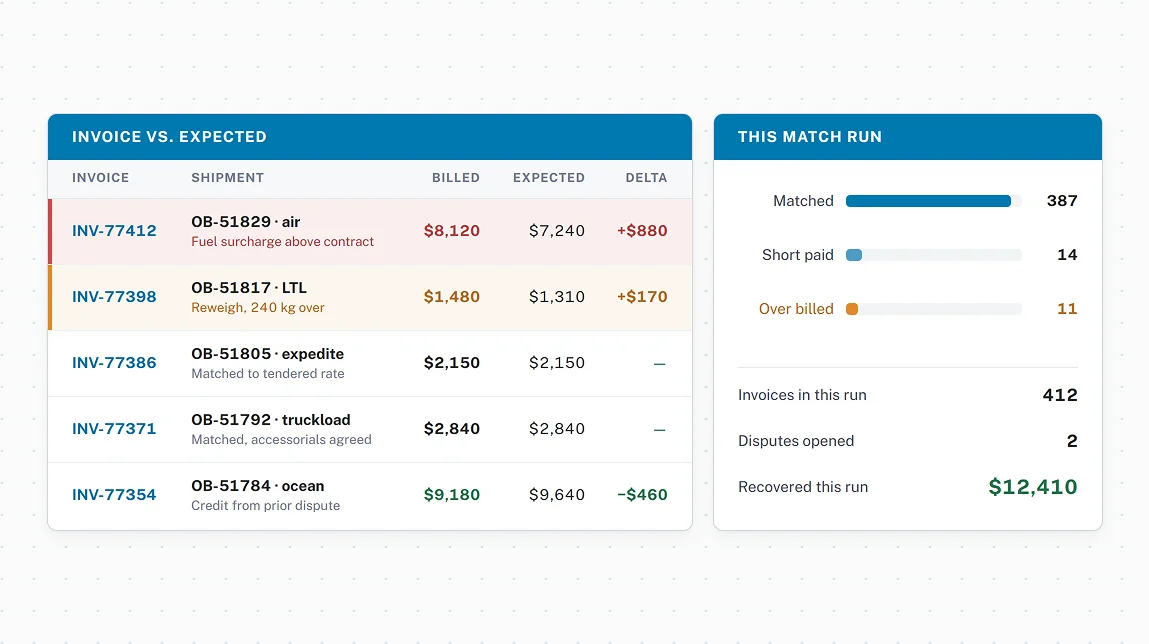
Match-file integration closes the loop between forecast and invoice.
- Native match-file integrations with the top 20 FAP providers, including Cass, U.S. Bank, Trax, A3, and ControlPay
- Estimated cost sits next to invoiced cost on every shipment record
- Actual-charge file returns automatically once the FAP provider completes the audit
Real customers, real results

A global engineering firm serving defense and government clients saved $760,000 annually through automated spot quoting and tendering, while cutting per-shipment costs by 16% with Agistix.
Read the case study →More to explore across the platform
The world is taking notice



See Agistix in action
Get a closer look at how Agistix forecasts freight spend and reconciles it against actual cost.
FAQs
How often does the freight spend forecast update?
Continuously. The forecast updates as new shipments move, rather than on a periodic reporting cycle.
How does Agistix identify variance between estimated and actual freight cost?
Agistix identifies variance automatically, at the shipment level. When a FAP provider returns the actual-charge file, it's posted against the same shipment record that carried the original estimate, so estimated and invoiced costs sit side by side without reconciling separate reports by hand.
Which freight audit and payment providers feed actual cost back into the forecast?
Agistix integrates with the top 20 FAP providers, including Cass, U.S. Bank, Trax, A3, and ControlPay. The match file sent to these providers carries shipment data, contracted charges, accessorials, cost center, and business unit, so the actual-charge file that comes back reconciles against the same dimensions the forecast was built on.
Can scenario modeling show the spend impact of consolidating shipments?
Yes. Scenario modeling quantifies the spend reduction from consolidating parcel into LTL or LTL into truckload, using the same contracted rates and shipment data behind the live forecast, so the projected savings reflect what you'd actually pay rather than a generic estimate.
Can freight spend be forecasted by cost center as well as business unit?
Yes. Forecasts are queryable by cost center, business unit, mode, lane, carrier, or accessorial type, individually or in combination, so finance can build a forecast at whatever level of granularity a given budget conversation requires.