
How to Improve Supply Chain Visibility in Complex Global Networks
With global networks growing more complex and fragmented, achieving end-to-end supply chain visibility is critical for managing delays, controlling transportation costs, and meeting customer expectations. This article explores actionable strategies and technology solutions to centralize supply chain data and automate exception management. Implementing these tools builds a more resilient, efficient, and transparent global logistics operation.
Supply chains now involve more countries, suppliers, and carriers than ever. According to QIMA’s 2026 Global Sourcing Survey, 43% of supply chains changed sourcing locations in 2025, with a large share of new US orders going to Vietnam, India, Bangladesh, and Mexico. Yet, only 18% of businesses said they have full end-to-end visibility. Each new supplier brings its own forwarders, carriers, and sub-tier suppliers, and each party controls only part of the shipment information, each with separate reporting processes. In this fragmented environment, delays are often discovered too late, logistics teams are left acting on old information, and customers are kept in the dark.
These gaps are why so many companies are now looking at how to improve supply chain visibility. This article covers seven strategies to close these gaps and gain comprehensive visibility into global logistics operations.
What Is Supply Chain Visibility?
Supply chain visibility is the ability to obtain reliable, timely information about orders and shipments throughout their lifecycle. Track and trace is part of it, but not the whole story. A GPS ping can show where a trailer is, but not whether the correct PO is on board or if the carrier charged the contracted rate. End-to-end supply chain visibility includes order and delivery statuses, but it also pulls in partner data and financial information. This lets logistics teams see where freight is and when it will land, which carriers are falling short, and whether freight invoices match contract agreements.
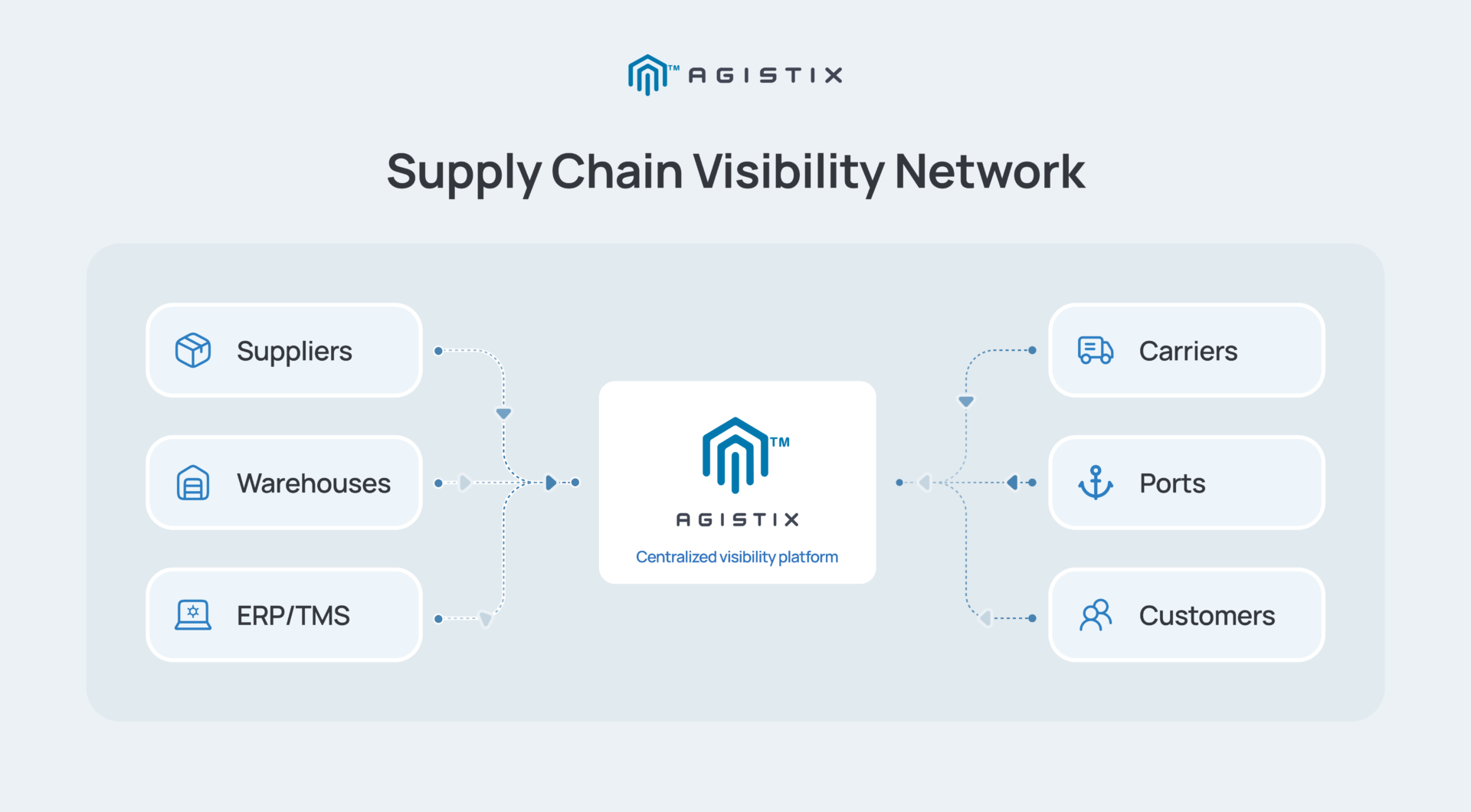
Achieving this level of visibility requires a centralized platform, which is why many companies exploring how to improve supply chain visibility start with data integration, then add analytics and technology on top. Modern visibility solutions pull data from suppliers, transportation providers, customs agents, and internal departments to establish a single source of truth for all stakeholders – effectively simplifying the way partners across global networks interact and collaborate.
Why Supply Chain Visibility Is Critical for Global Logistics
Companies today often buy raw materials from suppliers on multiple continents and organize transportation through a complex network of carriers, forwarders, and 3PLs, each with its own systems and processes. Centralizing that data into a single view is essential to helping companies overcome several specific challenges.
-
- Growing network complexity: Every new supplier, carrier, and forwarder adds more handoffs, and shipment data ends up split across more systems. In KPMG’s 2026 State of Next-Gen Supply Chain survey, 44% of respondents selected supply chain visibility as their top planned technology investment in the next one to three years.
- Cost volatility: Ongoing market instability from geopolitical conflicts and rising fuel costs has put enormous pressure on freight budgets. Maintaining visibility over transportation costs and performance is critical to identifying inefficiencies and cost-saving opportunities.
- Rising customer expectations: B2B buyers expect the kind of shipment tracking they get from parcel carriers. They can usually work around a late delivery if they hear about it early, but a surprise delay often erodes trust and loyalty.
- Frequent disruption: Typhoons in the South China Sea or labor stoppages at European ports can delay shipments by a week or more. Yet only 3% of supply chain respondents in the Allianz Risk Barometer survey said their own supply chains were resilient to disruption.
Better visibility can’t prevent an expected delay, but it shortens the time between the event and the response, so a team can still reroute goods or alert the customer in advance. For many logistics leaders, improving supply chain visibility is key to building a more agile and resilient supply chain.
7 Strategies to Improve Supply Chain Visibility
In a 2023 McKinsey survey, 79% of companies reported having dashboards for end-to-end visibility, yet 49% still faced major planning challenges due to disruptions. A dashboard is only the first step for a team working toward comprehensive visibility. Strategies to improve supply chain visibility utilize technology to improve workflows and communication channels across the network.
- Centralize data across systems. Most visibility gaps begin with data that is spread across multiple disparate systems. PO data lives in the ERP and booking information in the TMS, while carriers and suppliers maintain their own records in external systems. The gap is often most pronounced in inbound visibility, as freight booked by suppliers or third parties doesn’t go through the internal TMS. Centralizing data from these sources into a shared shipment record eliminates silos and ensures all departments and partners work from the same information.
- Implement real-time shipment tracking. Shippers can no longer rely on email updates from carriers when shipments span multiple time zones. With carrier API and EDI connections, plus GPS and telematics streaming, logistics teams get real-time transportation visibility across every mode and every carrier. Live data also enables more accurate ETAs, so production planning can run as scheduled and customer service can share reliable delivery updates.
- Improve collaboration with suppliers and logistics partners. Most of the shipment information a shipper needs sits with its partners. When suppliers validate a booking and ready date in a shared portal, and the forwarder uploads the BOL and packing list to that record, both parties work from one source of information instead of trading numerous emails to get accurate information.
- Use supply chain analytics. Tracking historical transit performance for each lane shows where there are consistent delays or service failures. Scorecards show whether carriers actually meet their service level agreements, while supply chain data analytics tools provide deeper insights into overall transportation performance, freight costs, and opportunities to consolidate or shift modes to improve efficiency.
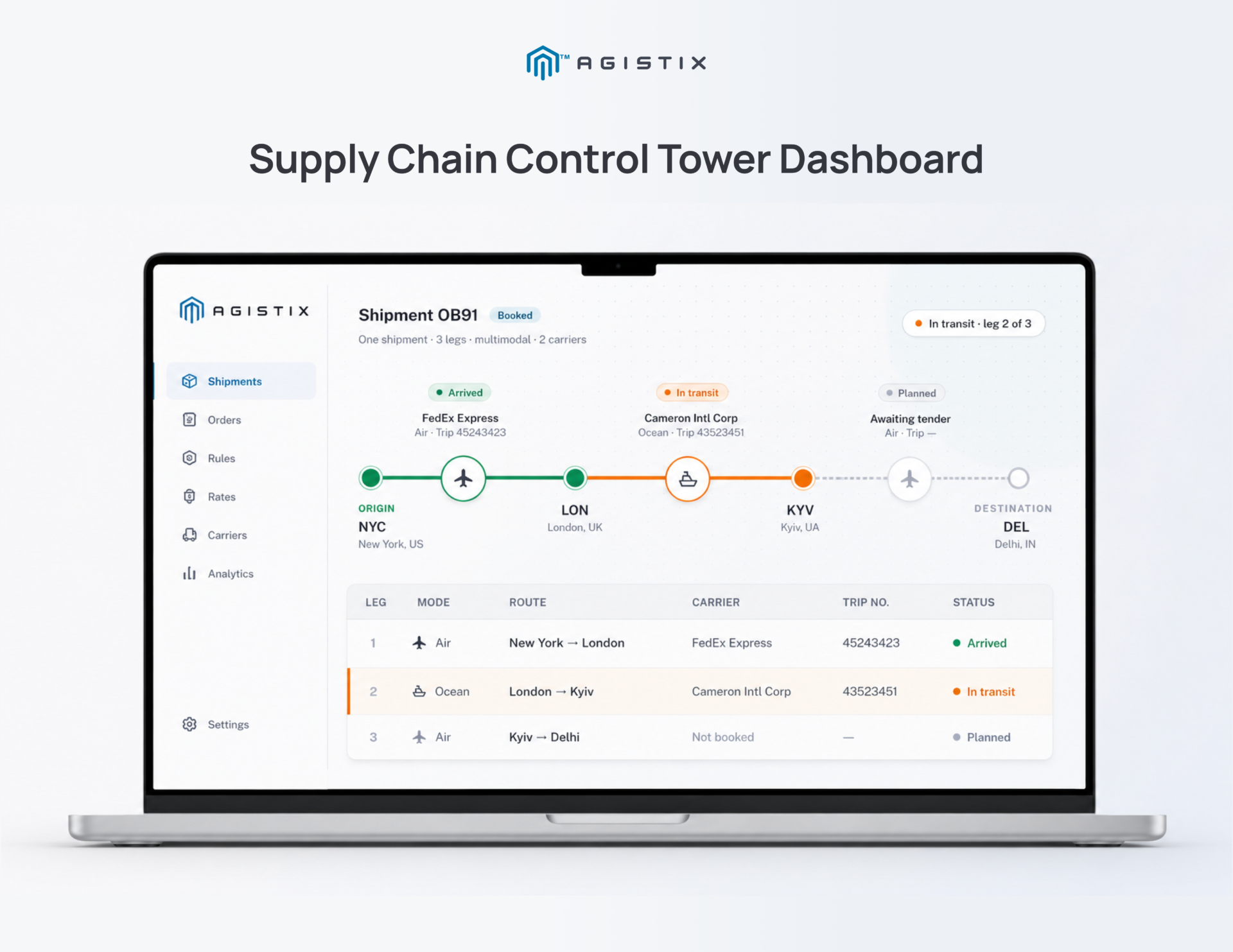
- Deploy a supply chain control tower. A control tower acts as a command center that consolidates orders, shipments, and partner performance by region and mode on a single screen, eliminating the need to use carrier web portals and spreadsheets. Its real strength, however, is enabling proactive response to disruptions and delays, as teams can see alerts and evaluate alternate options in the same system.
- Automate exception management. Effectively monitoring and tracking thousands of shipments manually is nearly impossible. Modern visibility platforms have configurable rules to flag missed pickups, late departures, customs holds, temperature excursions, or invoice discrepancies. Every alert goes directly to the right person with all relevant shipment details, so they can act quickly.
- Strengthen supply chain resilience. Good data enables better agility and flexibility, which in turn improves supply chain resilience. Lane and carrier history can show where the network relies on a single port, supplier, or carrier, so backup plans can be arranged in advance.
Technologies That Enable Supply Chain Visibility
End-to-end visibility relies on several technologies working together. For teams deciding how to improve supply chain visibility, these are the core pieces:
- Enterprise systems (TMS, WMS, and ERP platforms): These hold the core order and shipment records, but they rarely talk to each other out of the box. Connecting them through supply chain integration is the first job, and that is where the next layer comes in.
- API and EDI integrations: APIs transmit updates in seconds, while EDI is an older technology many carriers and suppliers still use, so a comprehensive visibility setup needs to support both.
- IoT devices, sensors, and GPS: Sensors detect the temperature, humidity, and shocks on sensitive shipments, while GPS shows a shipment’s real-time location. Both provide essential data for logistics teams, especially those moving high-value or time-sensitive freight.
- AI and machine learning: Advanced intelligence tech is increasingly being used to improve ETA predictions and provide early warning signals for at-risk shipments.
- Supply chain analytics platforms: Carrier scorecards, lane trends, and cost reports provide valuable information to evaluate performance and identify opportunities for improvement and cost savings.
Modern supply chain visibility platforms connect these pieces, giving logistics teams real-time visibility and operational control over shipments.
Benefits of End-to-End Supply Chain Visibility
Transportation teams aren’t the only ones who benefit when an organization improves supply chain visibility. Finance and customer service also feel the supply chain visibility benefits.
- Operational efficiency: Planners spend less time on status emails, carrier portal logins, and keying in tracking numbers. Booking and rerouting decisions are made from a live view of what is en route and where freight has arrived, rather than an out-of-date report.
- Reduced transportation costs: Having carrier performance and spend data on hand leads to better rate negotiations. Spotting delays early also reduces the need for expensive expedited shipments to rescue a late order.
- Better partner relationships: Suppliers, carriers, and forwarders all work from the same shipment information, so issues get resolved quickly and collaboratively. Performance reviews are factual, referencing missed pickups or deliveries, incomplete documentation, or lack of communication, rather than opinions.
- Improved customer experience: Customers get early warning of delays and more accurate ETAs, which over time improves on-time and in-full (OTIF) performance.
- Increased resilience: Advance knowledge of severe weather, port congestion, and supplier issues gives teams time to switch carriers or reroute freight before the customer is impacted.
Bringing Visibility to Complex Global Networks
Global networks will undoubtedly continue to diversify by adding suppliers, lanes, and partners to insulate against disruption and market volatility, and the cost of acting on outdated data increases with each addition. That’s why leading organizations are prioritizing supply chain visibility and system integration to connect systems and stakeholders. Those that are able to do this successfully work more efficiently and recover faster from disruption, which keeps customers satisfied and protects critical margins.
Agistix brings inbound, outbound, and partner shipments into a single platform, regardless of where or how they were booked. With more than 4,000 integrated data sources, it covers every stage of transportation execution, from order to invoice. To improve supply chain visibility across your network, request a demo of the platform today.
Frequently Asked Questions
How does improved supply chain visibility improve the planning process?
Supply chain visibility provides real-time data on lead times, carrier performance, and shipment status, so plans can adapt as conditions change. This includes things like moving a dock appointment or switching a carrier booking, and providing historical shipment data for reliable forecasting.
If a company wants better end-to-end supply chain visibility, what should it fix first?
Organizations that want better supply chain visibility should start with data integration. For most teams, this starts with integrating ERP, TMS, and WMS records with carrier and supplier data to create a single shipment record. Live tracking, analytics, and alerts are far easier to integrate once a comprehensive shipment record exists.
Is shipment tracking the same thing as supply chain visibility?
Not quite. Shipment tracking is one element of supply chain visibility, but it only tells a logistics team where a shipment is. Comprehensive visibility goes further and shows how the carrier is performing, flags any exceptions, and monitors costs across the shipment lifecycle.
What technologies are needed to improve supply chain visibility?
Improving supply chain visibility requires integrating numerous technologies, including internal enterprise systems (TMS, WMS, and ERPs) and external partner systems, as well as IoT sensors, GPS, and analytics or AI tools that turn data into alerts and forecasts. EDI and APIs are critical connectors for pulling this data into a centralized hub.
