
How Supply Chain Data Integration Improves Logistics Visibility
Supply chain data integration connects ERP, TMS, WMS, carriers, suppliers, and other data sources to establish a consistent view of shipment activities. Once unified, the advantages include better supply chain visibility, faster response to disruptions, and improved planning and forecasting. The right tools unite data sources with APIs or EDI standards, standardize the data, and combine everything into a single dashboard with role-specific alerts and end-to-end security. The result is lower costs and more reliable deliveries.
Where a particular inbound order is depends on which system a logistics manager checks. The ERP says the PO is still open, the forwarder’s portal claims the container left the port on Tuesday, the EDI from the carrier has not updated since the vessel departure, and the warehouse will not know anything about the freight until the ASN arrives. Each record is correct but tells only part of the story, and as supply chains grow more complex, tying it all together manually delays decisions. Supply chain data integration resolves this at its root by uniting data from multiple sources, creating the foundation for end-to-end visibility and real-time decision-making. This article explains how supply chain data integration improves logistics visibility and the benefits it brings.
What Is Supply Chain Data Integration?
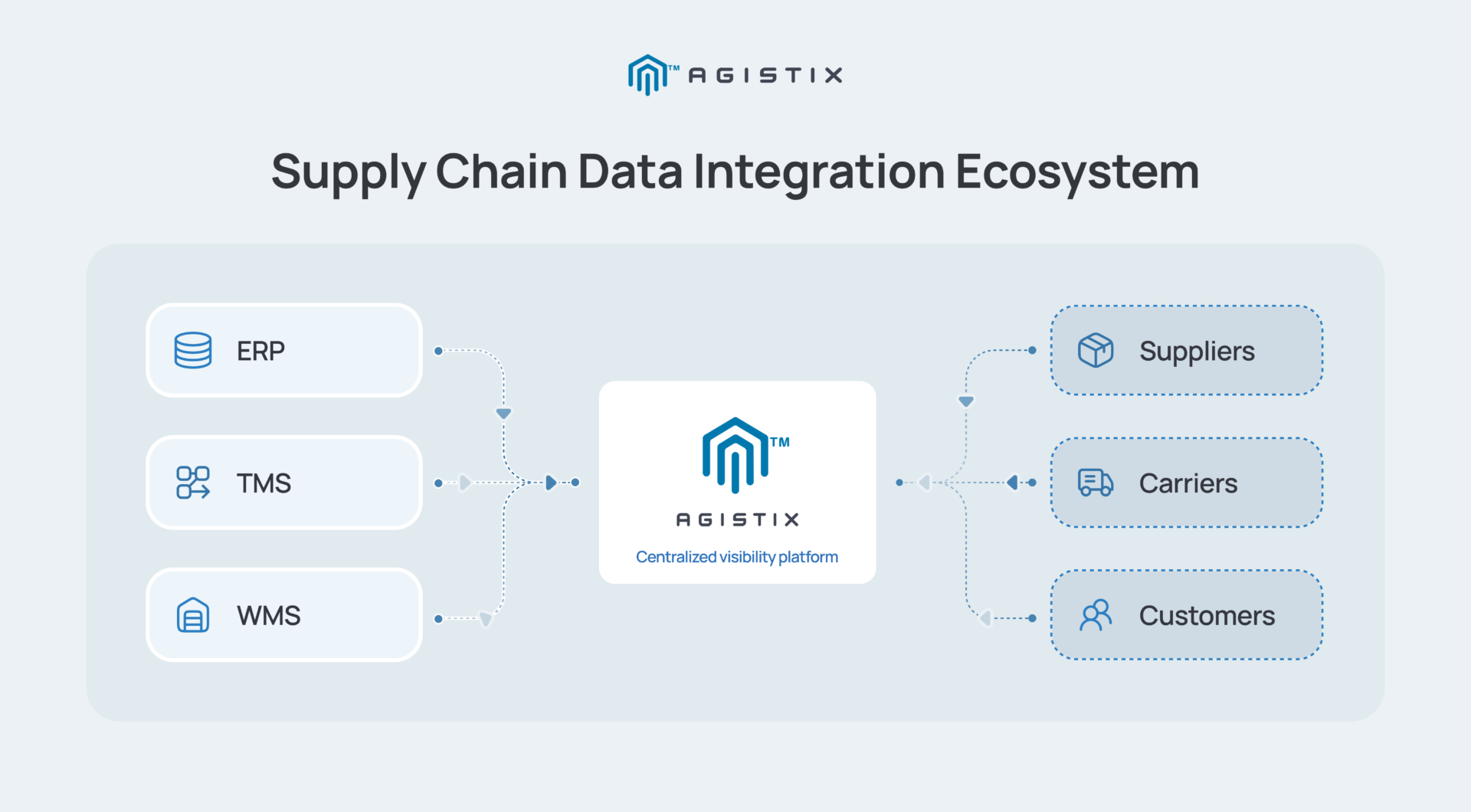
Supply chain data integration unifies the data from internal systems and external logistics partners to establish end-to-end logistics visibility. Buyers, planners, and customer service teams can use the unified data to view the order status and shipment details in near real time. The most common sources of logistics data include:
- ERP for purchase orders, inventory, and finance data
- TMS for logistics activity, including rates, carrier data, and tracking updates
- WMS for inventory levels and distribution data
- Carrier platforms for shipment tracking and invoice reconciliation
- IoT trackers and GPS hardware for shipment monitoring
Unless they’re connected, the information from these disparate systems presents an incomplete picture of supply chains. A PO in an ERP will show a line-item breakdown of a particular order, but it likely lacks the carrier reference number needed to monitor the order once it ships, leaving downstream operations completely in the dark. By integrating disparate data into a centralized platform, shippers, logistics partners, and customers get access to accurate, reliable information whenever they need it.
Why Logistics Visibility Matters in Modern Supply Chains
The world’s supply chains are increasingly dynamic and multi-tiered. According to a 2024 Gartner survey, 73% of organizations opened or closed production locations in their supply chain networks over the previous two years. And these changes undeniably introduce new visibility challenges. McKinsey research found that 95% of companies report being aware of Tier 1 supplier risks, but only 42% reported having visibility into Tier 2 and beyond. For every new partner or node in the production chain, organizations must unify and link additional data to create reliable logistics visibility, which puts significant pressure on logistics and IT teams.
That pressure does not stop with complexity. Customers now demand real-time visibility into delivery status, while freight rates, fuel surcharges, and tariffs continue to push transportation costs higher. Geopolitical tensions and climate-related disasters add yet another layer, with disruptions on one continent rippling through global supply chain operations with little notice.
These challenges often drive organizations to embrace supply chain integration to achieve improve visibility. However, the current state of that data integration is far from ideal, as Gartner’s 2025 Supply Chain Executive Report found that only 29% of supply chain organizations had developed at least three of five characteristics for future readiness, including integrated ecosystems.
How Supply Chain Data Integration Improves Logistics Visibility
Most supply chain visibility challenges stem from similar causes, primarily the lack of a single source of data. By uniting the information from carriers, suppliers, and internal systems, companies can ensure that everyone receives the same updates, eliminating much of the guesswork involved in delivery management. Integrated data improves logistics visibility in five specific ways.
1. Creates a Single Source of Truth
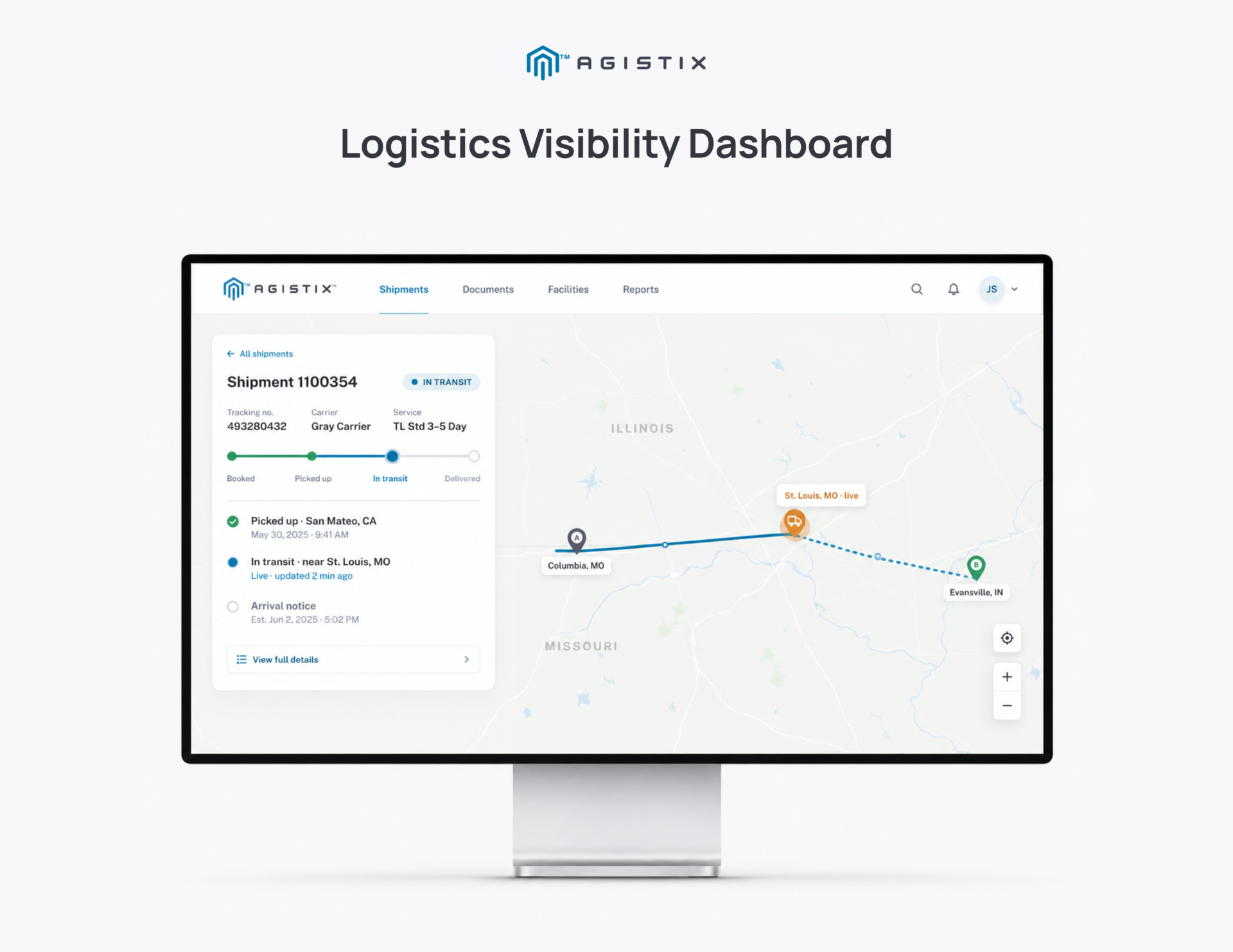
Data from carriers, suppliers, and internal systems is bundled and shared in a single logistics dashboard, removing the uncertainty around shipment status. Planners, buyers, finance, and customer service can see and respond to the same information, eliminating the need for phone calls and emails to coordinate across departments and partners. Logistics data centralization also enables logistics agility, a critical feature for demand-driven companies. Key benefits of integrating supply chain data from a single source are:
- Consistent data across teams: Less manual rekeying of PO and tracking numbers, where many errors begin
- Faster decision-making: Alerts go to the owner of the problem instead of waiting for the next meeting
- Improved collaboration: Less back-and-forth email between partners, since both use the same shipment data
2. Enables Real-Time Shipment Tracking
Shipment tracking and transportation visibility are among the main reasons organizations seek end-to-end supply chain visibility. GPS data, telematics, carrier systems, and TMS data can be combined to provide an accurate picture of where a shipment is at any given time across all modes of transport, including LTL, truckload, air, and ocean freight. Advanced logistics dashboards eliminate the need to log in to dozens of websites to track a single shipment while ensuring carriers meet delivery expectations and contract rates.
3. Improves Exception Management
When logistics data is consolidated, exceptions and disruptions are easier to identify. A pickup delay, customs inspection, or reefer temperature excursion becomes visible quickly, allowing customer service teams to update buyers on potential shipment delays in advance. This level of logistics visibility empowers organizations to provide customers with transparency and sets the stage for proactive communication. At the same time, exception management enables logistics planners and executives to react to the disruptions by expediting critical shipments to meet fulfillment obligations, finding alternate carriers to recover freight, or adjusting production schedules to accommodate delays.
4. Enhances Forecasting and Planning
A logistics planner’s forecast is only as good as the data behind it. Consolidating existing records and tracking active shipments in real time creates an integrated data foundation for more accurate projections. For example, supply chain data analytics can combine historical carrier performance data with current delivery data to improve lead time estimates. Accurate forecasting sits at the center of supply chain planning, and combining reliable historical data with modern analytics makes it possible.
5. Supports Supply Chain Resilience
Supplier issues, weather events, and transportation delays can quickly put an organization’s commitments at risk. Supply chain data integration brings real-time visibility into supplier and carrier performance, enabling faster risk analysis and response. For instance, a logistics manager can identify a carrier disruption, assess which impacted shipments are most critical to operations, and find alternative solutions to minimize downstream issues. Resilient supply chains are those that are prepared to respond to disruptions quickly, and logistics visibility is essential for identifying vulnerabilities for further investigation.
Benefits of Supply Chain Data Integration
The value of integrated data goes further than visibility and better planning. By consolidating data from multiple sources, organizations can enjoy advantages that go beyond better delivery management, including:
- End-to-end visibility, from the supplier’s dock to final delivery
- Better decisions based on current information, not an outdated spreadsheet
- More goods delivered on-time and in-full (OTIF)
- Lower freight costs, with scorecards that identify the most reliable carriers
- Fewer invoice disputes, since freight bills match real shipment records
- Greater control and compliance across the supply chain
The benefits of data integration stem from an improved ability to track and manage orders that empowers organizations to operate more efficiently and with greater agility. In particular, standardized carrier data enables shippers to achieve more predictable delivery schedules and better control freight costs.
Essential Features of a Supply Chain Data Integration Solution
Data integration solutions offer varying benefits, depending on the features available. When reviewing software options, logistics managers should pay specific attention to the following features:
- Real-time data synchronization – The ability to receive frequent updates as they come in
- API and EDI connectivity – The option to use existing data exchange methods, including APIs or EDI formats
- Data normalization – Carrier status codes and formats are unified within one standard set to ensure consistency across every record
- Dashboards and alerts – Customizable dashboards and notifications that help surface delays
- Scalability – The option to add more suppliers, carriers, and customers as the business grows
- Security – Role-specific access to data and end-to-end data encryption
Modern supply chain visibility platforms utilize these features to ensure that organizations derive maximum benefit from their logistics data. At the same time, the right carrier data integration tools can eliminate the need to manage dozens of point-to-point connections and make it easier to onboard new partners as needed to improve operations.
Supply Chain Data Integration Use Cases Across Industries
While the principles of supply chain data integration apply universally, individual sectors leverage connected systems to solve unique operational challenges and drive efficiency.
Manufacturing
In industrial and high-tech manufacturing, integration links multi-tier supplier data directly with plant scheduling and assembly lines. Unifying inbound component flows with production systems prevents costly line stoppages, aligns material arrivals with demand forecasts, and improves overall operational continuity.
Healthcare
Healthcare organizations rely on integrated data to maintain strict trace-level visibility for temperature-sensitive pharmaceuticals and medical devices. Centralized data feeds simplify complex regulatory compliance, streamline chain-of-custody documentation, and help prevent critical supply shortages across healthcare networks.
Logistics Providers
For third-party logistics providers and freight forwarders, data integration consolidates disparate carrier updates into a single dashboard. Automated status sharing provides shippers, consignees, and partners with real-time shipment updates, reducing manual tracking inquiries and improving service levels.
By tailoring data integration to industry-specific demands, organizations transform disjointed networks into responsive, high-performing logistics ecosystems.
Turning Connected Data Into Logistics Visibility
Supply chain data integration helps organizations get more value from the logistics data they already have. By removing the barriers between disparate data sources, shippers and logistics providers can use connected data to gain end-to-end visibility and make better operational decisions. The advantages range from faster response to disruptions to reduced costs and more accurate delivery estimates. In turn, logistics visibility enables greater supply chain resilience, preparing organizations for future disruptions.
Agistix provides logistics data integration solutions that help organizations put their logistics data to work. With more than 4,000 integrated data sources, the platform covers all stages of transportation execution, from order to invoice. To see what connected data can do for your operations, request an Agistix demo today.
Frequently Asked Questions
How does supply chain data integration improve logistics visibility?
Supply chain data integration improves visibility by centralizing information from internal systems like ERP, WMS, and TMS with external carriers and partners into a single platform, creating a reliable single source of truth for all stakeholders.
What systems should be connected for supply chain data integration?
The systems that should be connected for supply chain data integration include Enterprise Resource Planning (ERP) systems for purchase orders and inventory, Transportation Management Systems (TMS) for logistics activity and rates, Warehouse Management Systems (WMS) for distribution data, and external carrier platforms along with IoT trackers. Having data from these sources in a single hub reduces redundancy and provides a reliable source of information for internal teams, external partners, and customers.
How can logistics data integration help spot supply chain disruptions early?
Logistics data integration helps identify supply chain disruptions by consolidating records and active tracking feeds so that issues like pickup delays, customs holds, or temperature excursions become immediately visible across teams before they severely impact fulfillment.
How does supply chain visibility and integration support better exception management?
Supply chain visibility and integration support better exception management by providing real-time alerts on issues like delays or disruptions, empowering customer service and logistics teams to proactively communicate and execute contingency plans like finding alternate carriers. Advanced integration platforms can also help identify available solutions to streamline decision-making and expedite resolution.
