5 Freight Procurement Strategies to Lower Transportation Costs
Freight procurement is more than simply negotiating a lower base rate with a carrier. Supply chain professionals often face disruptions and hidden inefficiencies that introduce additional unplanned costs. Strategic freight procurement limits risk exposure and puts more control in the hands of supply chain professionals, reducing overall transportation spend. Increasing the visibility of every link in the supply chain, whether it is shipment data, carrier reliability, or routing patterns, through a centralized dashboard provides stakeholders with valuable data. This article offers five actionable strategies to use this data. It shows how organizations can track accessorial charges and optimize freight costs across the entire supply chain.
Freight procurement decisions directly influence transportation spend and overall supply chain costs. A bad decision can eat into one’s margins, but keeping costs under control requires more than securing the lowest rates. Effective procurement is built on regular carrier performance reviews, detailed supply chain analytics, and consistent transportation cost monitoring.
This means that effective procurement decisions depend on available data. The more visibility a company has into freight rates, shipment patterns, and transportation data, the more likely it is to identify inefficiencies and opportunities to adjust and secure savings immediately or in future operations.
This article identifies five actionable strategies logistics teams can use to drive efficiency in freight procurement to lower transportation costs.
What Is Freight Procurement?
Freight procurement is a critical piece in a company’s success puzzle. It involves evaluating transport needs and selecting suitable service providers, whether carriers or other transportation partners. It also involves negotiating rates and terms, allocating freight, and monitoring performance over the shipment lifecycle. This helps ensure the supply chain functions as efficiently as possible, while maintaining control over costs.
But effective freight procurement should never be based on the lowest available rate. Businesses should also consider a number of other factors, including:
- Carrier contract terms
- Service levels and on-time performance
- Shipment volume and capacity availability
- Transit times
- Transportation modes and routes
- Accessorial charges and other costs
Unfortunately, a major stumbling block for many businesses is the disconnect between different channels within the organization. Storing transportation data across numerous systems and departments creates fragmentation, leaving teams working with partial information at every step of decision-making. That fragmentation hampers a company’s ability to maximize transportation efficiency.
Common Freight Procurement Challenges
Supply chain and logistics teams make critical decisions based on available data. Without a unified data set, accurate data-driven decisions are very difficult. This environment creates several common challenges.
- Fragmented data: Disjointed systems make it difficult to monitor freight accurately across the shipment lifecycle. This can create visibility gaps during transit and make it harder to accurately analyze costs and performance over time.
- Limited carrier performance visibility: Obscured or incomplete carrier data affects performance metrics, such as agreed service levels or transit times. With no way to accurately monitor performance, service and efficiency often suffer.
- Changing transportation costs: Shifts in fuel costs, spot market volatility, and seasonal demand fluctuations impact freight spend predictability. Without centralized data, identifying these patterns and adjusting cost forecasting is nearly impossible.
- Manual analysis: Manually entering and reconciling data is time-consuming and error-prone, making it unreliable for analysis and efficient decision-making.
- Lack of communication and feedback: Poor communication between carriers and other supply chain partners makes it difficult to identify issues in real time and address them proactively.
5 Freight Procurement Strategies to Lower Transportation Costs
Ongoing supply chain visibility is essential to the ultimate goal of lowering costs. Logistics teams need continuous, real-time updates that show how freight moves, cost upon delivery, and whether service providers are executing as agreed.
These five strategies can help keep freight costs down, even amid market volatility.
Strategy 1. Analyze Transportation Spend
Total transportation spend analysis requires looking beyond the initial quoted invoice.Teams should also break down costs by lane, mode, and carrier to understand where capital is flowing and where quoted prices differ from billed amounts. Detailed spend analysis highlights potential consolidation options or alternative routing that could deliver freight savings.
Strategy 2. Evaluate Carriers Using More Than Price
Base carrier rates don’t paint the complete picture when it comes to total freight costs. Focusing on the lowest quoted price pulls the blinds over a carrier’s overall performance. Effective carrier selection has to take into account both data and service quality. Logistics teams should monitor on-time delivery (OTD) rates, tender acceptance rates, and billing accuracy. Additionally, less quantifiable metrics, such as proactive communication, are of utmost importance. A low base rate remains a distant concept once the carrier starts triggering hidden accessorial costs or compliance penalties.
Strategy 3. Identify Routing and Mode Optimization Opportunities
Historical shipment patterns often expose optimization opportunities. However, relying on historical data in a volatile, shifting market can inadvertently lead to higher transportation costs. This puts logistics teams under constant pressure to evaluate all options, for example, whether LTL shipments can be consolidated into full truckload shipments. Switching from airfreight to road transport, or vice versa, on certain lanes could also reduce operational costs. The key is identifying these opportunities and optimizing freight procurement accordingly.
Strategy 4. Monitor Carrier Performance and Compliance
Negotiated contracts lose value if a carrier doesn’t comply with the terms, whether by rejecting tenders or failing to meet routing guidelines. Monitoring time-sensitive metrics, such as tender acceptance rates and on-time pickup and delivery, guarantees carrier performance stays within the parameters promised during freight sourcing. Making sure carriers comply with contracted rates reduces the risk of overcharges and unauthorized accessorial fees that drive up freight spend.
Strategy 5. Continuously Monitor Transportation Costs
Transportation costs vary, especially in volatile market conditions. Freight costs are affected by different factors that can change on a daily basis, such as fluctuating fuel prices. This means freight cost optimization should be carried out frequently. Leveraging centralized and systematic data collection can lead to better data-driven decisions. Estimating costs on previous year’s data leads to serious shortcomings, while continuous monitoring gives supply chain teams real-time insights into market spikes and helps keep the budget intact.
Freight Procurement vs. Rate Negotiation
Lowering carrier rates during negotiation is only the first step in strategic freight procurement. Ignoring the broader picture leaves businesses unable to respond to market volatility and more susceptible to hidden fees and operational inefficiencies. Freight cost optimization requires continuous analysis.
Transitioning from the quest for the cheapest rates to strategic transportation procurement requires looking beyond quoted prices and using actual transportation data to identify consolidation opportunities and carrier compliance issues.
| Rate Negotiation | Strategic Freight Procurement |
| Focuses primarily on carrier rates | Considers rates, service, capacity, and performance |
| Often occurs during sourcing or contract cycles | Uses continuous transportation analysis |
| May rely on quoted or historical rates | Uses actual shipment and cost data |
| Focuses on price reduction | Focuses on total transportation cost and value |
| Limited visibility after contracts are signed | Continuously monitors carrier and transportation performance |
| May overlook routing and shipment patterns | Identifies routing, mode, and consolidation opportunities |
How Transportation Data Supports Better Freight Procurement
Logistics teams need reliable data to understand the full scope of transportation costs. They also need data to verify whether their service providers are delivering on their promises.
Centralized data enables teams to:
- Compare costs across multiple carriers and lanes
- Analyze historical shipment activity and identify changes in shipment patterns
- Monitor carrier performance
- Identify recurring transportation inefficiencies
- Track actual settled transportation cost over time
- Support informed, data-backed negotiations to measure the impact of procurement decisions
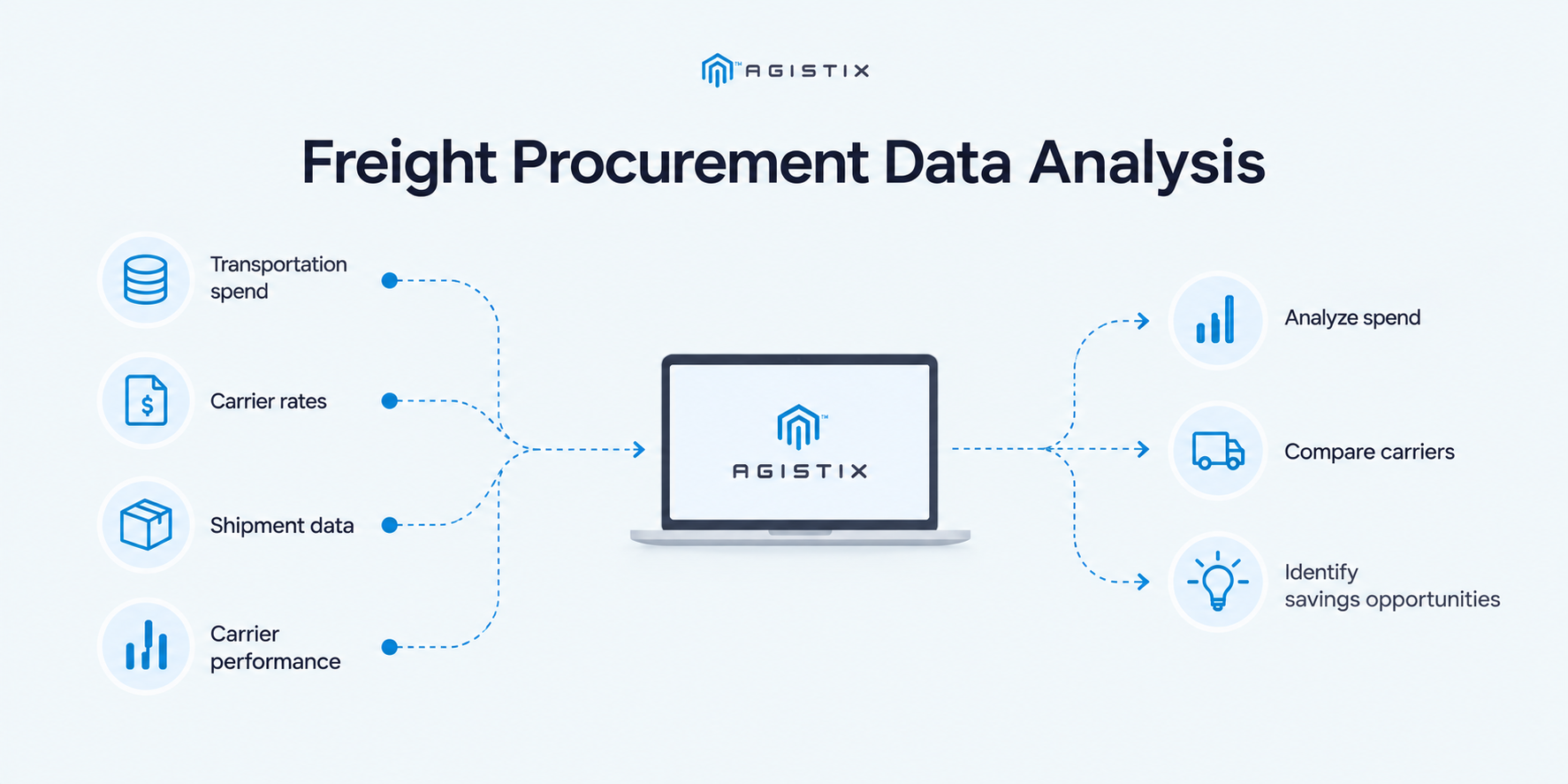
Modern transportation visibility platforms integrate all the necessary data streams into a single dashboard. These platforms can bring together data from carriers, freight forwarders, enterprise systems, and other sources to provide a complete operational overview. This data centralization supports more agile supply chains and is increasingly the norm for proactive freight management.
Key Data Points to Monitor for Freight Procurement
Logistics teams thrive on standardized and integrated financial and operational data, which enables them to devise and execute the best freight procurement strategy. Merging supply chain KPIs with detailed financial tracking allows companies to pinpoint the exact cause of freight cost leakage.
Metrics that enable supply chain professionals to reduce costs include:
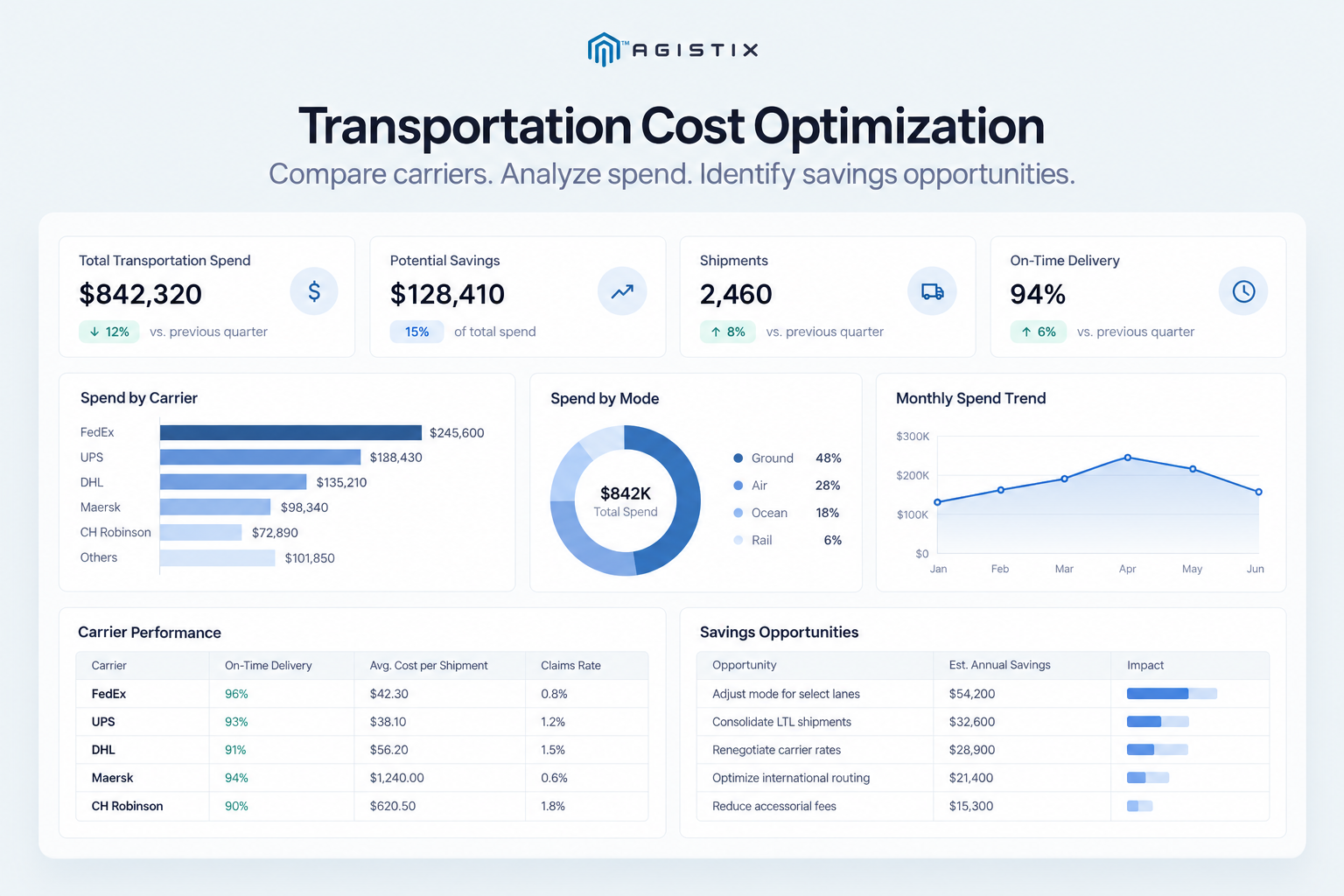
- Freight spend by carrier and lane: Tracking localized spend can unveil cost leakage by specific carriers or routes.
- Shipment volume by mode, lane, and carrier: This data highlights trade seasonality and reveals opportunities for mode shifts or consolidation.
- Contract rate compliance and tender acceptance: Tender rejection can push the shipper into a spot market, which often spikes costs beyond negotiated contracts.
- Capacity availability: Making sure the necessary equipment is available when needed protects the supply chains against tightening markets.
- Accessorial charges: Understanding and isolating secondary fees limits exposure to sudden additional costs.
- On-time pickup (OTP) and delivery (OTD): Monitoring OTP and OTD provides insight into whether a carrier is delivering the quoted value.
- Actual vs planned transportation costs: Comparing the amount billed versus initial quotes provides a true picture of expenses.
Bringing cost, shipment, and performance data points together provides a more complete operational picture and helps teams identify where the most capital is spent and what causes additional costs. It also shows whether choosing a different carrier, modifying the route, or shifting the mode of transport could improve the results.
Alt text: freight procurement dashboard for transportation cost and carrier performance analysis
Delivering Transportation Visibility Through Technology
Transportation execution and visibility platforms move supply chain teams away from spreadsheets and fragmented data. Instead of post-shipment reviews, modern digital platforms provide intelligence that uncovers optimization opportunities across the entire supply chain.
Centralizing shipment and transportation data and providing visibility into actual costs gives logistics teams immediate insight into actual spend versus quoted rates. Furthermore, supply chain visibility delivers real-time performance metrics and connects them with shipment activity. Modern digital platforms have the ability to quickly identify bottlenecks by leveraging real-time analysis and historical data, making future decisions more cost-effective.
Agistix’s advanced freight management platform provides this level of visibility. It automatically captures and centralizes shipment data from all carriers, modes, and regions, including third-party and inbound freight. With a single source of truth and advanced analytics to identify freight patterns and cost variances, logistics teams have all the information they need to drive smarter freight procurement decisions.
To see the Agistix platform in action, request a demo today.
Frequently Asked Questions
Why does freight procurement matter for controlling transportation costs?
Freight procurement determines the carriers, terms, and processes that govern every dollar spent on transportation. Securing a competitive base rate is only the starting point. Strategic procurement builds the framework for monitoring carrier performance, tracking actual versus billed costs, and adjusting to market conditions before they inflate spend.
What is the difference between freight procurement and carrier rate negotiation?
Rate negotiation is one step within a broader procurement process. Strategic freight procurement encompasses rate negotiation but extends to continuous spend analysis, carrier performance monitoring, routing and mode optimization, and contract compliance tracking. Each of those factors affects total transportation cost beyond what any contracted rate alone can control.
How does centralized transportation data improve freight procurement decisions?
Centralized data gives logistics teams a single, accurate view of freight spend, carrier performance, and shipment patterns. Those inputs support procurement decisions based on actual operations rather than quoted estimates, enabling teams to compare costs across carriers and lanes, identify routing inefficiencies, track contract compliance, and measure the real impact of procurement decisions over time.
What strategies can logistics teams use to reduce freight procurement costs?
Effective freight cost reduction depends on continuous analysis rather than periodic action. Logistics teams that limit procurement activity to sourcing cycles miss the inefficiencies that accumulate between them. Reviewing transportation spend by lane, mode, and carrier on an ongoing basis, monitoring carrier performance against contracted terms, and evaluating routing and consolidation opportunities as shipment patterns evolve all produce more durable savings than rate negotiation alone.
