5 Supply Chain Analytics Examples for Improving Global Logistics Efficiency
Modern logistics is too volatile for manual tracking and best-guess decision-making. This article explores how supply chain analytics examples like freight cost management and real-time visibility help organizations manage logistics costs and improve performance.
By converting raw transaction data into meaningful insights, logistics teams can move from a defensive posture to one of active control. Relying on data-based analytics ensures the supply chain functions as a predictable asset rather than an unmanaged expense.
Modern global logistics is defined by permanent volatility. Every disruption and delay generates a data trail, yet few organizations understand the value of that information. While logistics transactions produce massive volumes of data daily, 63% of companies still aren’t using technology to monitor supply chain performance.
The gap between data generation and data utilization forces logistics teams to rely on fragmented carrier portals and manual spreadsheets, resulting in reactive decision-making and unnecessary added costs. Analytics work to convert raw transaction data into measurable and meaningful insights that teams can actually use. The article explains why all this matters and provides five supply chain analytics examples that enable companies to enhance visibility and build a more resilient operation.
What Is Supply Chain Analytics?
Supply chain analytics is the strategic process of evaluating logistics data to identify patterns and inform better decision-making. It transforms disparate data points into a comprehensive digital record of performance.
Organizations typically use three types of supply chain analytics to manage logistics:
- Descriptive Analytics: Uses historical data to explain what happened in the network, such as past carrier spend or shipment volumes.
- Predictive Analytics: Analyzes historical trends to forecast future outcomes, allowing teams to anticipate potential disruptions.
- Prescriptive Analytics: Recommends specific actions to optimize results, such as suggesting a shift in transportation modes to reduce costs.
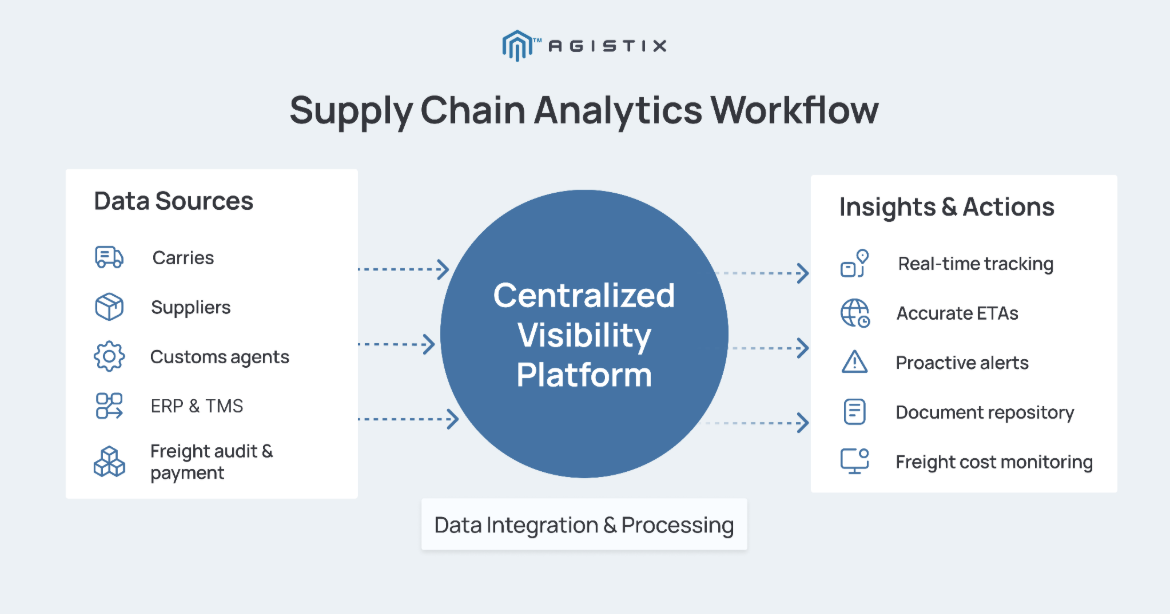
Centralized analytics platforms provide the visibility needed to manage complex global logistics networks. By integrating data from every carrier and supply chain partner, these tools effectively eliminate the information lag that slows operations.
Why Supply Chain Analytics Is Essential for Global Logistics
Modern trade complexity demands real-time decision-making capabilities. Customer expectations for speed and transparency are increasing at a rapid pace, despite ongoing geopolitical instability and climate events that introduce constant tension. Manual workflows simply can’t scale to meet these conflicting pressures.
Automating data capture solves that problem by connecting disparate systems to deliver a comprehensive view of the entire network. Applying analytics to integrated data streams then transforms raw numbers into useful insights, which offers several significant advantages.
- Cost Protection: Real-time spend analysis identifies billing errors and unauthorized charges immediately.
- Service Reliability: Objective performance records ensure carriers and 3PLs meet established service level agreements.
- Proactive Exception Management: Real-time visibility allows logistics teams to address shipment delays before service failures occur.
- Evidence-Based Sourcing: Historical cost and performance records provide the leverage for contract negotiations.
Ultimately, the insights from supply chain analytics examples help move an organization from a reactive posture to one of active control. Relying on hard data rather than best guesses allows companies to stabilize their costs and maintain a competitive edge, no matter how volatile the market becomes.
5 Supply Chain Analytics Examples That Improve Logistics Efficiency
Real-world applications demonstrate the tangible value of data-driven logistics. While there are countless metrics an organization could track, the most significant impact comes from focusing on transportation and logistics, as these areas can account for over half of total supply chain expenditures. Below are several supply chain analytics examples that can directly impact and improve logistics performance.
1. Freight Cost Management and Rate Compliance
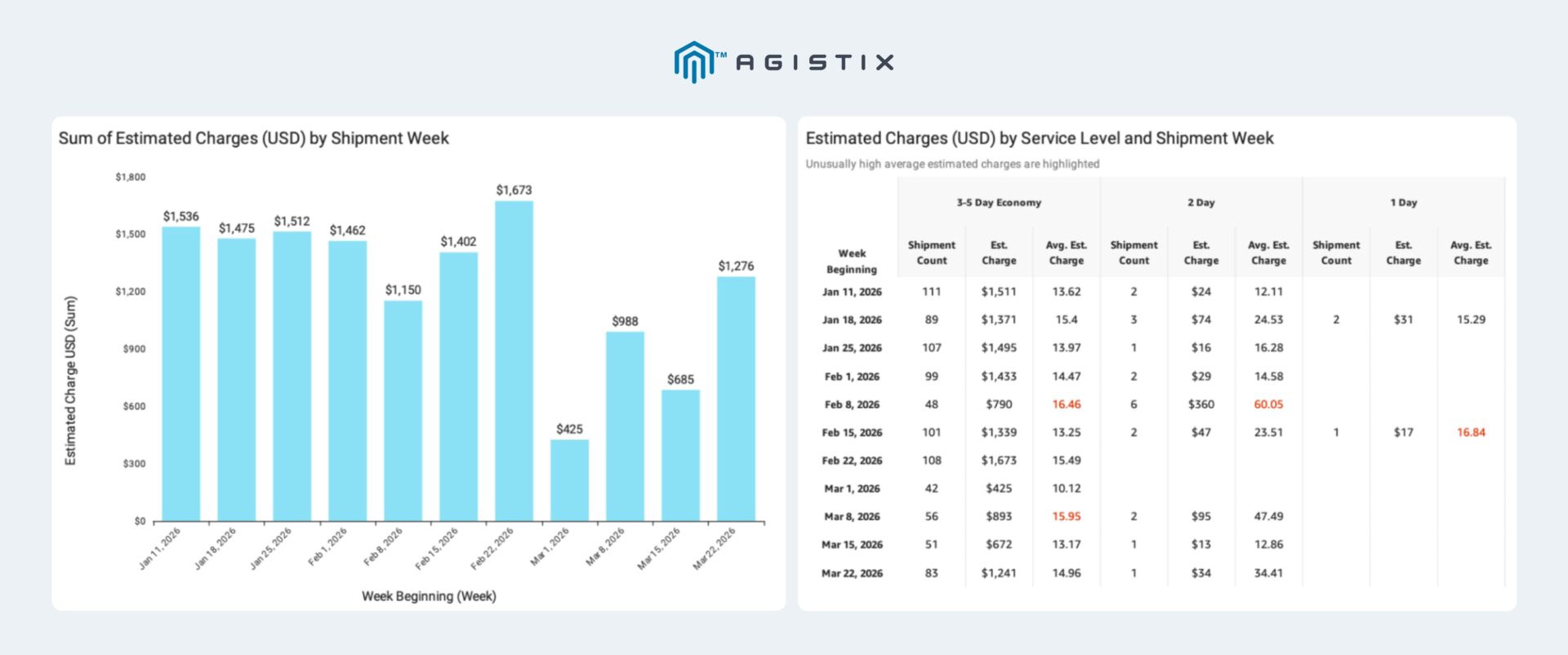
Logistics teams use analytics to ensure they are actually paying what they negotiated. High-fidelity data identifies cost-saving opportunities and stops rate creep before it impacts the monthly budget. Key applications include:
- Routing Guide Compliance: Monitoring whether shipments are diverted to more expensive carriers or unauthorized modes.
- Contracted vs. Spot Comparison: Assessing how contracted rates stack up against current spot market volatility to ensure optimal spend.
- Audit Automation: Flagging invoices that deviate from agreed-upon lane rates or fuel surcharges.
- Accessorial Charge Monitoring: Identifying patterns in hidden fees like detention or redelivery to address root causes with carriers.
2. Real-Time Shipment Tracking and Visibility
End-to-end supply chain visibility moves a team past basic location tracking and into proactive management. Analytics tools consolidate data from multiple transportation modes into a single view, allowing for immediate intervention when a freight move stalls. This constant stream of accurate information enables fast issue resolution and better customer communication. Analytics support this through:
- Predictive Exception Alerts: Identifying shipments at risk of missing a window hours or days before the delay occurs.
- Milestone Analytics: Tracking the time spent at each leg of the journey to find specific “dead zones” in the network.
- Automated Customer Updates: Using real-time data to trigger automatic notifications for stakeholders, reducing the burden on customer service teams.
3. Freight Consolidation and Modal Optimization
Data-driven consolidation strategies help companies move more freight for less money. Analytics identify opportunities to combine smaller shipments into larger ones, reducing the total number of shipments and lowering the overall cost per unit. These opportunities often include:
- Parcel to LTL/LCL: Shifting high-volume parcel shipments into Less-than-Truckload or Less-than-Container loads.
- LTL to Multi-Stop FTL: Combining multiple LTL shipments headed in the same direction into a single, multi-stop Full Truckload.
- Cross-Regional Consolidation: Identifying shipments from different suppliers that can be merged at a central hub to leverage better bulk rates.
4. Risk Management and Disruption Prediction
Analytics help teams stay ahead of the curve by identifying threats before they paralyze the network. Instead of reacting to a crisis after it breaks, logistics leaders use these insights to build supply chain resilience into their daily strategies. For example:
- Geopolitical Risk Modeling: Analyzing how a sudden tariff change or port strike in a specific region will impact landed costs across the entire product line.
- Alternative Lane Analysis: Comparing the historical reliability and current congestion levels of secondary ports or routes to have an alternate plan ready before the primary route fails.
- Weather and Transit Impact: Correlation of historical weather patterns with carrier delays to pad lead times or shift modes during predictable high-risk seasons.
5. Supplier Performance Analysis
High-fidelity data provides an objective way to evaluate the reliability of every partner in the network. Analytics track metrics like lead times and on-time delivery rates to highlight which partners are meeting expectations and which are causing friction. This allows for:
- Objective Scorecarding: Moving away from anecdotal feedback to hold carriers accountable for specific service failures or consistent delays.
- Strategic Sourcing: Using actual performance data rather than just the lowest bid to select the most reliable partners during contract negotiations.
- Lead-Time Accuracy: Refining production and delivery schedules based on the actual historical performance of suppliers rather than their promised lead times.
Key Features of Effective Supply Chain Analytics Solutions
Getting the benefits of these supply chain analytics examples requires a tech stack capable of handling high volumes of data. The most effective platforms move beyond simply reporting to provide actionable intelligence. Selecting a solution with the right capabilities ensures that an organization can transform raw logistics data into a strategic advantage.
An effective analytics solution should include:
- Real-time data integration: The ability to pull data from disparate sources ensures that decisions are based on the latest information rather than dated reports.
- Predictive and prescriptive analytics: Tools that do more than look backward, offering forecasts of potential delays and suggesting the best course of action to mitigate them.
- Visualization dashboards: High-level views of supply chain KPIs that allow logistics leaders to identify trends and anomalies at a glance.
- AI and machine learning capabilities: Advanced algorithms that identify complex patterns in carrier performance and cost fluctuations that human audits often miss.
- Risk monitoring tools: Features that correlate global events like weather or labor strikes with specific lanes in the network to provide early warning of disruptions.
- Integration with ERP, TMS, and WMS systems: Seamless connectivity with existing enterprise software to ensure a single source of truth across procurement, finance, and logistics.
By centralizing these features into a single platform, organizations can implement complex analytics strategies without the need for manual data normalization or constant IT intervention.
Supply Chain Analytics Use Cases Across Industries
Robust analytics offer practical benefits for any organization moving high-value or time-sensitive freight. While specific goals vary by sector, the focus remains on eliminating the uncertainty that leads to service failures and lost revenue.
- Manufacturing: Managers monitor supplier lead times and carrier performance to ensure the predictable arrival of raw materials. This data allows for sourcing adjustments that avoid line shutdowns and expensive rush-shipping fees.
- Healthcare: Analytics tools provide the visibility needed to track time-sensitive pharmaceuticals and medical equipment. Insights ensure critical supplies reach their destination within required windows and in optimal condition.
- Logistics Providers: 3PLs use real-time performance scorecards and automated alerts to maintain transparency with clients. Data allows these providers to optimize carrier networks while protecting their own operational margins.
Applying targeted analytics ensures that the movement of goods remains predictable and cost-effective, regardless of the industry.
Prioritizing Performance with Supply Chain Analytics
Supply chain data analytics examples demonstrate how data transforms logistics from a reactive burden into a meaningful asset. By focusing on freight spend, carrier performance, and real-time visibility, organizations can protect their margins and reduce the impact of global disruptions. Implementing these strategies eliminates the guesswork that leads to service failures and unnecessary transportation costs.
The Agistix platform combines logistics execution, visibility, and advanced analytics into a single, automated solution. By centralizing data from every carrier and partner, Agistix provides the insights needed to simplify global operations and build a more resilient network.